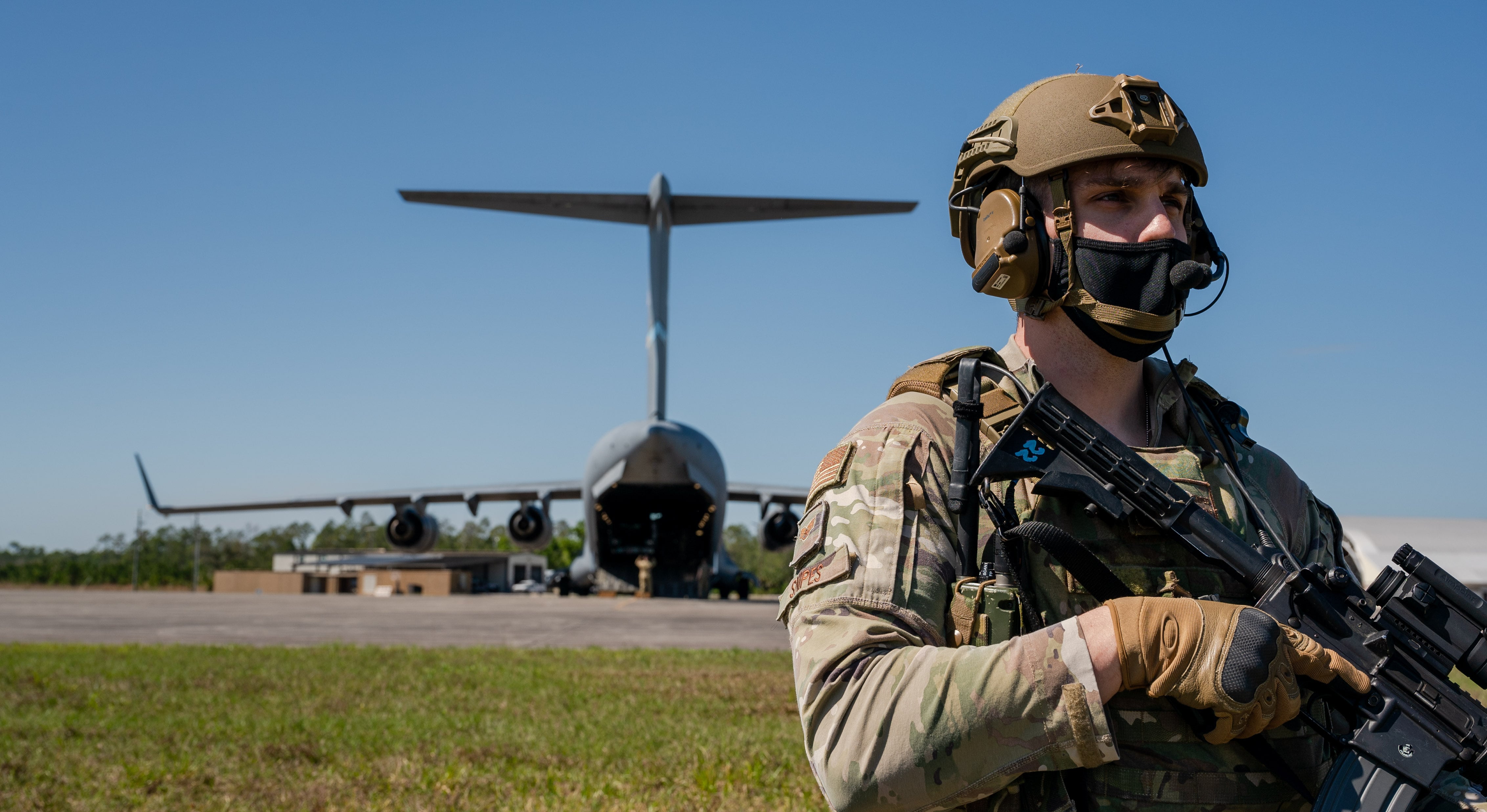
The Air Force has revamped previous leaders’ plans to overhaul the service, dropping several key aspects while keeping others.
Air Force Sec. Troy Meink and Chief of Staff Gen. Ken Wilsbach announced the changes to the “reoptimization plan” their predecessors released last year in a new memo, the service said Tuesday.
Some elements of the reoptimization plan — including large-scale exercises to prepare the service for a major war, the establishment of warrant officers and unit readiness inspections on short or no notice — will continue, the Air Force said.
But others — including the revamping of Air Education and Training Command into a new Airman Development Command, the creation of an Integrated Capabilities Command and a reorienting of Air Combat Command — will be scrapped.
Former Air Force Sec. Frank Kendall and former Chief of Staff Gen. David Allvin announced their reoptimization plan in Feb. 2024. It included 24 initiatives that intended to shift the Air Force’s focus and structure, to better allow it to prepare for — and win — a potential future war against a major power such as China.
But soon after the Trump administration’s term began, Defense Secretary Pete Hegseth put the reoptimization plan on hold. Meink began reviewing it after he became the new Air Force secretary.
One of the Air Force’s biggest proposed shifts within Kendall and Allvin’s plan was the creation of a new Integrated Capabilities Command, which intended to centralize planning as it set expected requirements for decades to come. Service leaders said at the time this would have allowed the Air Force to take a broader, more holistic view about what it would need.
The Air Force previously announced in October that it had abandoned plans to create the ICC, and will fold the functions of its provisional version into a restructured version of Air Force Futures by next April.
The service is also dropping a plan to “reorient” Air Combat Command to focus it more on generating and presenting ready forces to combatant commanders. The Air Force said ACC, which oversees most of the service’s fighters and other combat aircraft, will keep its traditional mission of organizing, training and equipping “combat-ready airmen.”
The Air Force said it will not create any new air base wings under the reoptimization plan, but wings that were already stood up will remain.
The service will keep wings as its main unit for taking action, using the Air Expeditionary Wing 2.0 approach. Under that method, a single wing will generate most command-and-control and base operating support when deployed, while drawing from other wings to supplement when more help is needed.
“Our focus is to minimize change fatigue to airmen and enable commanders to concentrate on readiness, lethality and mission accomplishment,” the Air Force said.
Not all of Kendall and Allvin’s changes will be dropped, however.
The multi-capable airmen concept — in which airmen are trained in jobs outside of their normal duty areas so they can step in when needed — will continue. The Air Force expects that in a major war against an adversary like China, airmen will need to operate from isolated bases without resupply or reinforcements for periods of time.
Without reinforcements, those bases might lack airmen who specialize in vital jobs such as fueling, maintenance, loading weapons onto aircraft, or guard duty. The multi-capable airmen concept means that airmen will be able to step into one of those understaffed, but still vital, jobs.
And the service will continue its revived warrant officer program, which over the last year has produced more than 100 new warrant officers to become technical and operational experts. The service previously phased out making new warrant officers in 1959, and the last warrant officer from that era retired in 1980.
“We will continue to recruit warrant officers to expand technical expertise in the cyber and information technology fields,” the Air Force said.
Stephen Losey is the air warfare reporter for Defense News. He previously covered leadership and personnel issues at Air Force Times, and the Pentagon, special operations and air warfare at Military.com. He has traveled to the Middle East to cover U.S. Air Force operations.