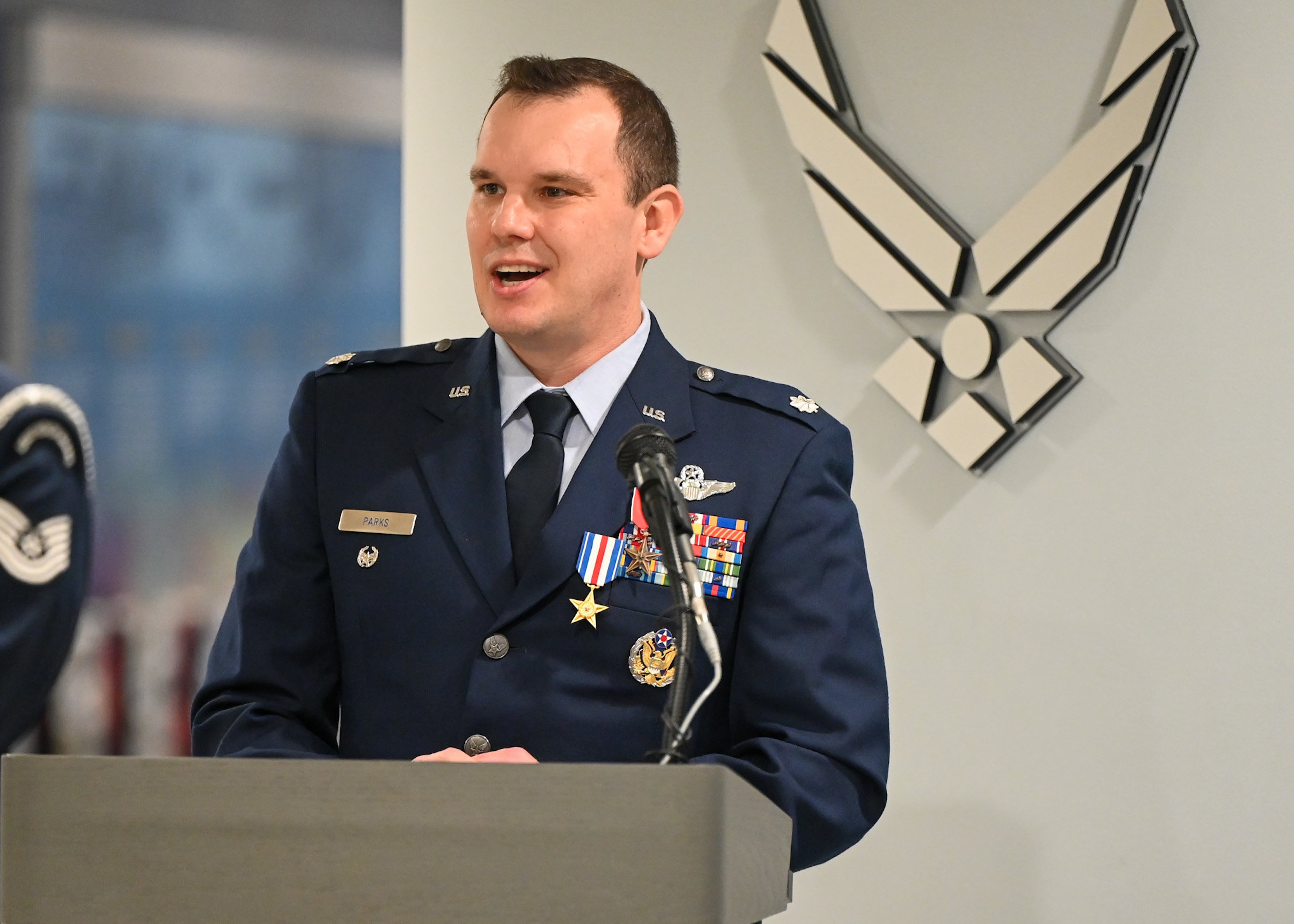
An Air Force squadron commander who led a history-making deployment to the Middle East was recently presented with the military’s third-highest combat award for combat heroism that reads like a Blockbuster movie script.
Lt. Col. William “Skate” Parks, who commanded the 480th Expeditionary Fighter Squadron out of Spangdahlem Air Base, Germany, until earlier this year, received the Silver Star at the Pentagon on Wednesday in recognition of a high-risk flight on March 27 that helped save the lives of his wingmen as well as his own from the urgent threat of running out of fuel, in addition to incoming enemy missiles.
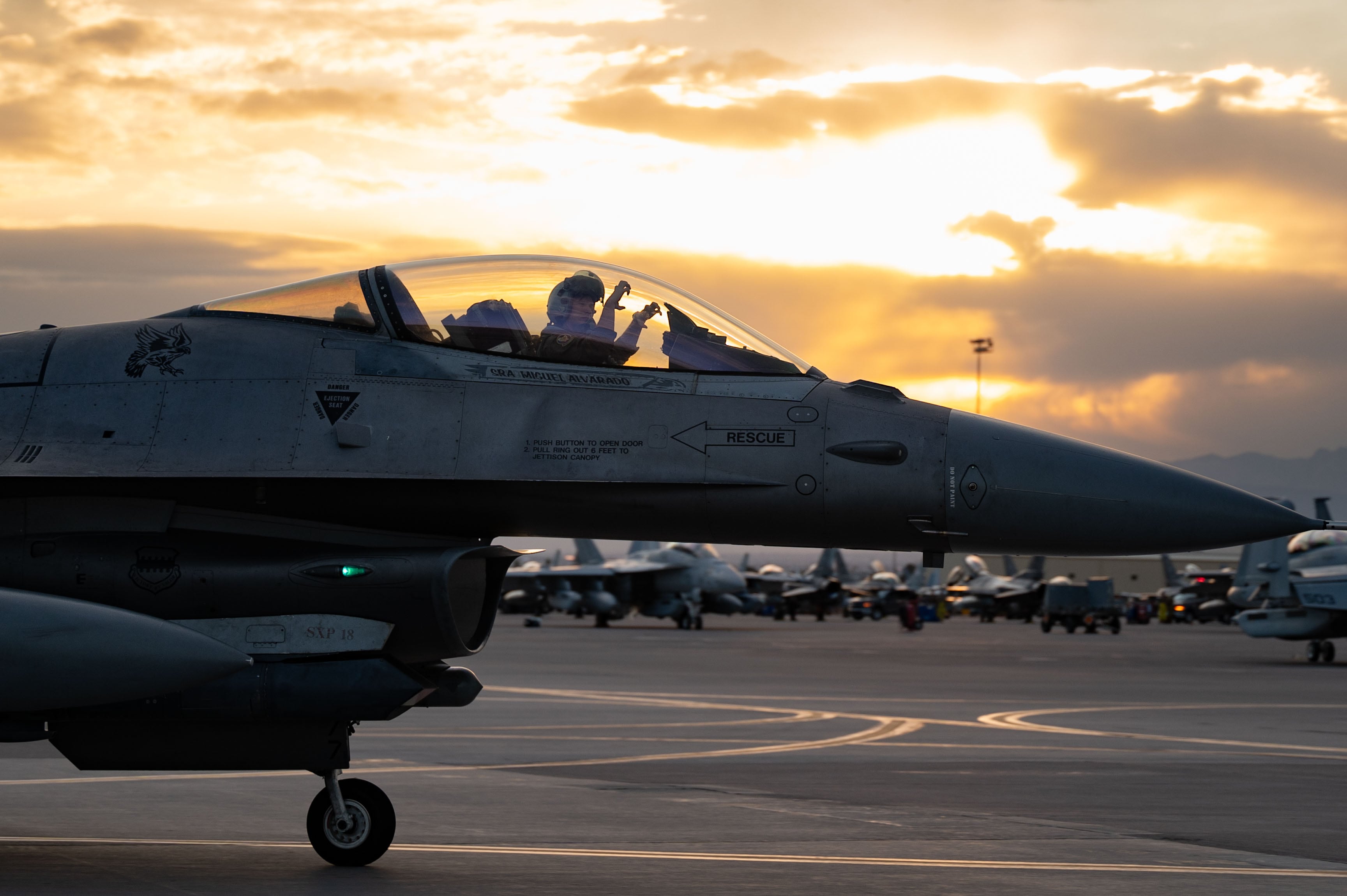
The 480th EFS was designated in 2010 with one of the Air Force’s rarer and more risky missions: Suppression of Enemy Air Defenses, or SEAD. As the only squadron in Air Forces Europe and Africa performing SEAD, it destroys, spoofs and subverts enemy ground-based air defenses, such as surface-to-air missiles and anti-aircraft guns.
While Air Force releases and Parks’ award citation do not specify where the squadron was operating in the Middle East at the time, the timeframe aligns with Operation Rough Rider, a series of strikes against the Iran-backed Houthi rebels in Yemen, who had been targeting merchant ships in the Red Sea and the Gulf of Aden since the Hamas attacks on Israel in October 2023. Operation Rough Rider began March 15 and continued through April. Operation Prosperity Guardian, a coalition-led response to the Houthis, was also ongoing and continued through May.
Parks, according to the award citation obtained by Military Times, had been serving as mission commander for a 21-plane force package of strike aircraft on March 27 while also leading four F-16 Fighting Falcons conducting SEAD operations.
“During this mission, Colonel Parks intentionally placed himself in threat range of a complex air defense zone protecting the enemy’s capital,” his citation reads. “Colonel Parks’ heroic decision ensured mission success in crippling enemy ballistic missile production facilities.”
However, this choice also left the aircraft vulnerable to enemy attack and dangerously short on fuel. Fighters on the ground loosed “a barrage of precisely targeted enemy air defense missiles and anti-aircraft artillery” at the four F-16s. Facing death from below, Parks had to resort to high-stress flight maneuvers typically reserved for dogfighting.
“For fifteen agonizing minutes, with enemy missiles detonating mere feet from his aircraft, Colonel Parks stoically led his flight through a series of high-G maneuvers and countermeasure employment,” the citation reads. “Below minimum fuel and still within enemy territory, Colonel Parks immediately coordinated for an emergency rendezvous with two separate tankers, ensuring his [flight’s] access to critical fuel and preventing the probable loss of two aircraft due to fuel starvation.”
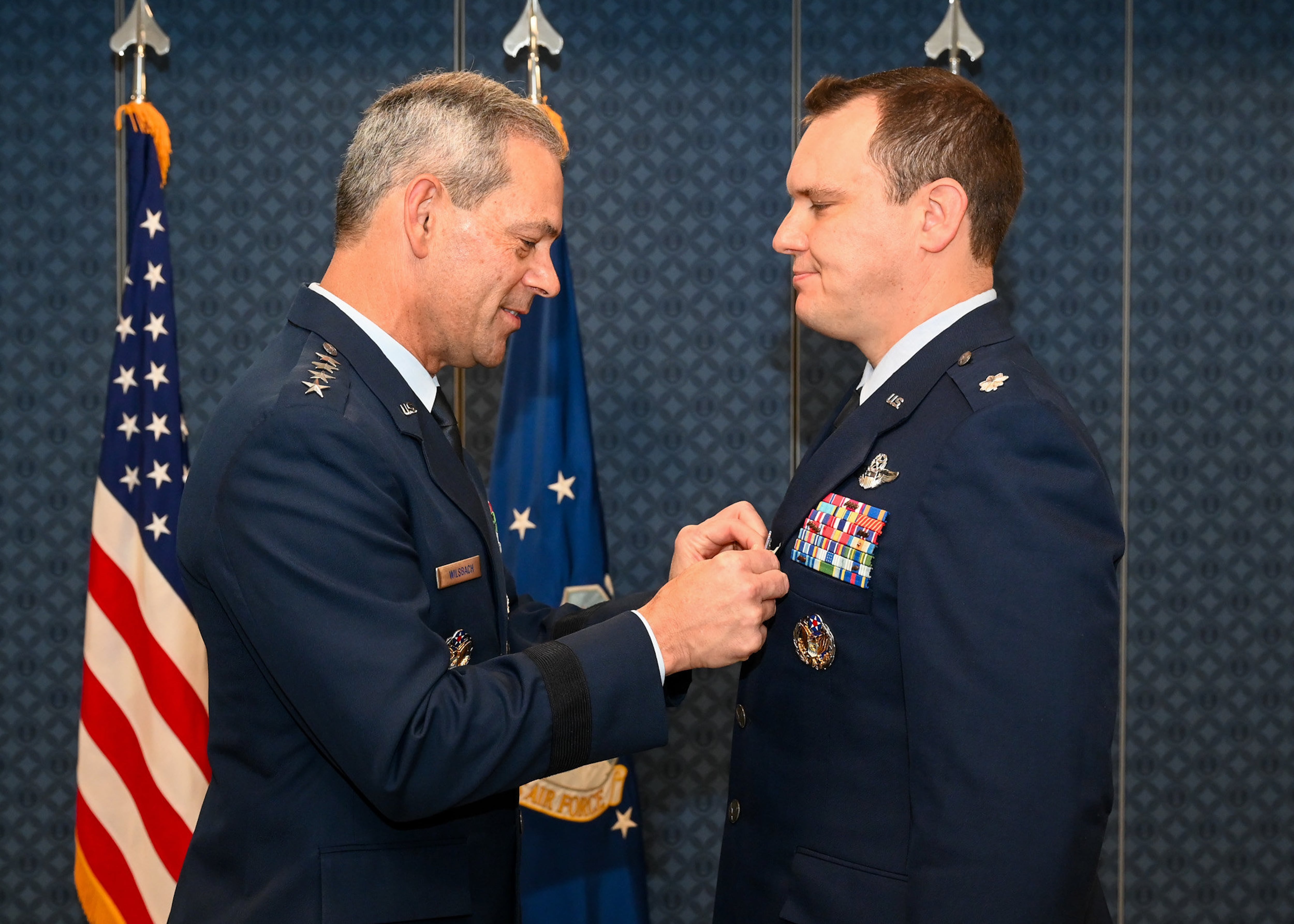
It’s rare for pilots to receive the Silver Star, an award just below the service crosses and the Medal of Honor. It’s rarer still for the award to go to a squadron commander. Air Force Chief of Staff Gen. Ken Wilsbach noted in Parks’ medal presentation ceremony that fewer than 100 Silver Stars had been presented within the Air Force since it became a service in 1947.
“After hearing Skate’s story, his leadership, decisive action, and skill in the face of danger, I absolutely believe he deserves this honor,” Wilsbach said, according to a service release. ”Recognizing valor in combat matters, and it is a privilege to serve alongside warfighters like him.”
The release noted that Parks had led his squadron to numerous other combat achievements during the deployment, including 108 shoot-downs of enemy drones and land attack cruise missiles — a record — and the first successful combat employment of an AIM-9M Sidewinder missile in three decades. Parks’ “innovative employment standards” in using the AIM-9M instead of the newer AIM-9X; and his use of relatively inexpensive AGR-20F Advanced Precision Kill Weapons System rockets, designed for air-to-ground combat, in an air-to-air role, also helped save the Air Force $25 million, the service said.
Six of the 108 aerial victories the squadron notched helped protect the USS Harry S. Truman, deployed to the region with more than 5,000 sailors onboard, and another five of the shoot-downs were missiles targeting his own aircraft, according to releases.
At the ceremony, Parks described cycling through peaceful and panicked feelings during his high-stakes mission.
“That loneliness settles in, even though it seems like it’s all happening fast, you just feel that moment where ‘I’m feeling very alone out here tonight,’” Parks said, according to releases. “And then that transitioned very quickly to elation. As I got a little bit closer, the [command and control] agencies and the Air Force team started picking me up, and my requests of ‘Hey, I need help! We’re out of gas. I need tankers moved.’”
He added that his family history in Air Force aviation, which includes his dad, an Air Force test pilot, and a grandfather who flew C-47 transport planes in Vietnam, added to the significance of the award. His brother and cousin are also pilots, the Air Force said.
“It is incredible, and this means a lot,” Parks said. “The amount of aviation and everything that we have in our family, that’s what shaped me and helped mold me.”
Recent combat operations involving enemy drones and missiles have resulted in the minting of new Air Force flying aces — a title given to those with five or more air-to-air shoot-downs — for the first time in more than half a century. While it’s not clear whether Parks himself has earned the title of ace, his award sheds light on an emerging era of aerial combat featuring a mix of manned and unmanned systems.
Hope Hodge Seck is an award-winning investigative and enterprise reporter covering the U.S. military and national defense. The former managing editor of Military.com, her work has also appeared in the Washington Post, Politico Magazine, USA Today and Popular Mechanics.