In the wake of the Dec. 7, 1941, attack on Pearl Harbor, President Franklin D. Roosevelt authorized the mass removal from the West Coast of “all persons deemed a threat to national security.”
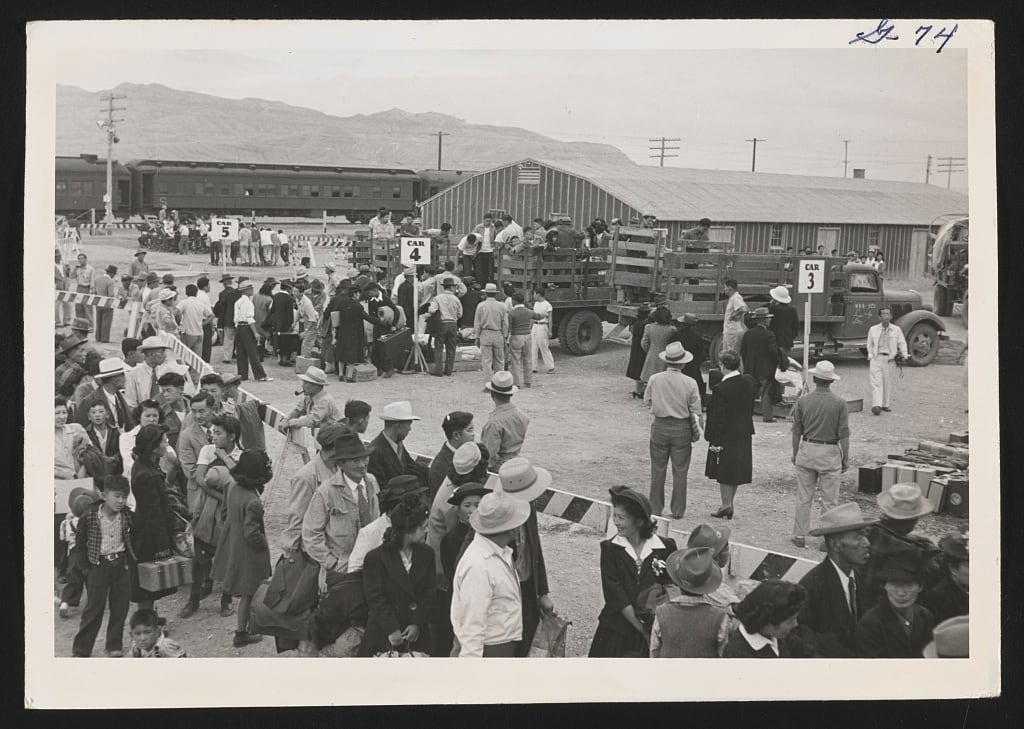
The policy, Executive Order 9066, was incited by widespread anti-Japanese American discrimination and set the stage for mass eviction, evacuation and incarceration of 120,000 first-generation Japanese immigrants, known as Issei, and Nisei, who were U.S. citizens by birthright.
They were penned into camps across desolate regions in California, Arizona, Wyoming and Colorado, among other states.
To add to the degradation, Americans of Japanese descent were initially denied the opportunity to serve their country. That changed, however, in 1944, as the United States — pulled into a world war — needed increasing manpower.
Despite the betrayal by their own country, nearly 33,000 Japanese Americans served in the armed forces, making up the 442nd Regimental Combat Team — a formation that, to this day, remains the most decorated Army combat unit.
The 442nd’s story, including that of Medal of Honor recipient and eventual Hawaii state Senator Daniel Inouye, is known. Less so, however, is the tale of a few hundred Nisei who defied the order to report for military duty.
Dozens were jailed for their actions but ultimately freed either by court order or presidential pardon.
A small group of resistors, led by Frank Emi and Kiyoshi Okamoto at Heart Mountain Relocation Center in Wyoming, argued that they could not, and would not, serve until the status of their citizenship had been clarified, according to the National Archives.
At first, Emi, like many others, accepted internment.
“Shikata ga nai” — or “it cannot be helped” — was a phrase often bandied about the camp.
However, after several years of scorching summer heat, dust storms and bitter winters, all while under armed guard, the arrival of draft orders in 1944 sent men like Emi and Okamoto to the brink.
“We could either tuck our tails between our legs like a beaten dog or stand up like free men, [imbued] with American ideals, and fight for justice,” Emi told the Los Angeles Times in 1993.
In response, the men began the Fair Play Committee to support the constitutional rights of interned Nisei. The group, made up of several hundred men, refused to serve as soldiers while their families were imprisoned in horse stables and tar paper barracks.
Early questionnaires sent by the U.S. government in 1943 had already drawn the ire of men like Emi, who resented such questions as: “Are you willing to serve in the armed forces of the United States on combat duty, wherever ordered?” and “Will you swear unqualified allegiance to the United States of America and faithfully defend the United States from any or all attack…?”
According to the Los Angeles Times, Emi’s response to both questions was the same.
“Under the present conditions and circumstances, I am unable to answer this question,” he stated.
Emi and his brother, Art, urged other interned Nisei to answer similarly, but were often derided as “no-no boys,” with many fearing this open rebellion would further damage the reputation of Japanese Americans.
Still, some 300 men across 10 camps refused induction — with one in nine Heart Mountain men shunning the order.
“We were very angry and frustrated at the injustice of what the government did to us. For a person raised in the American tradition — not the Japanese tradition of bowing to authority — we felt we had to speak out,” Emi told the Times.
And speak out they did.
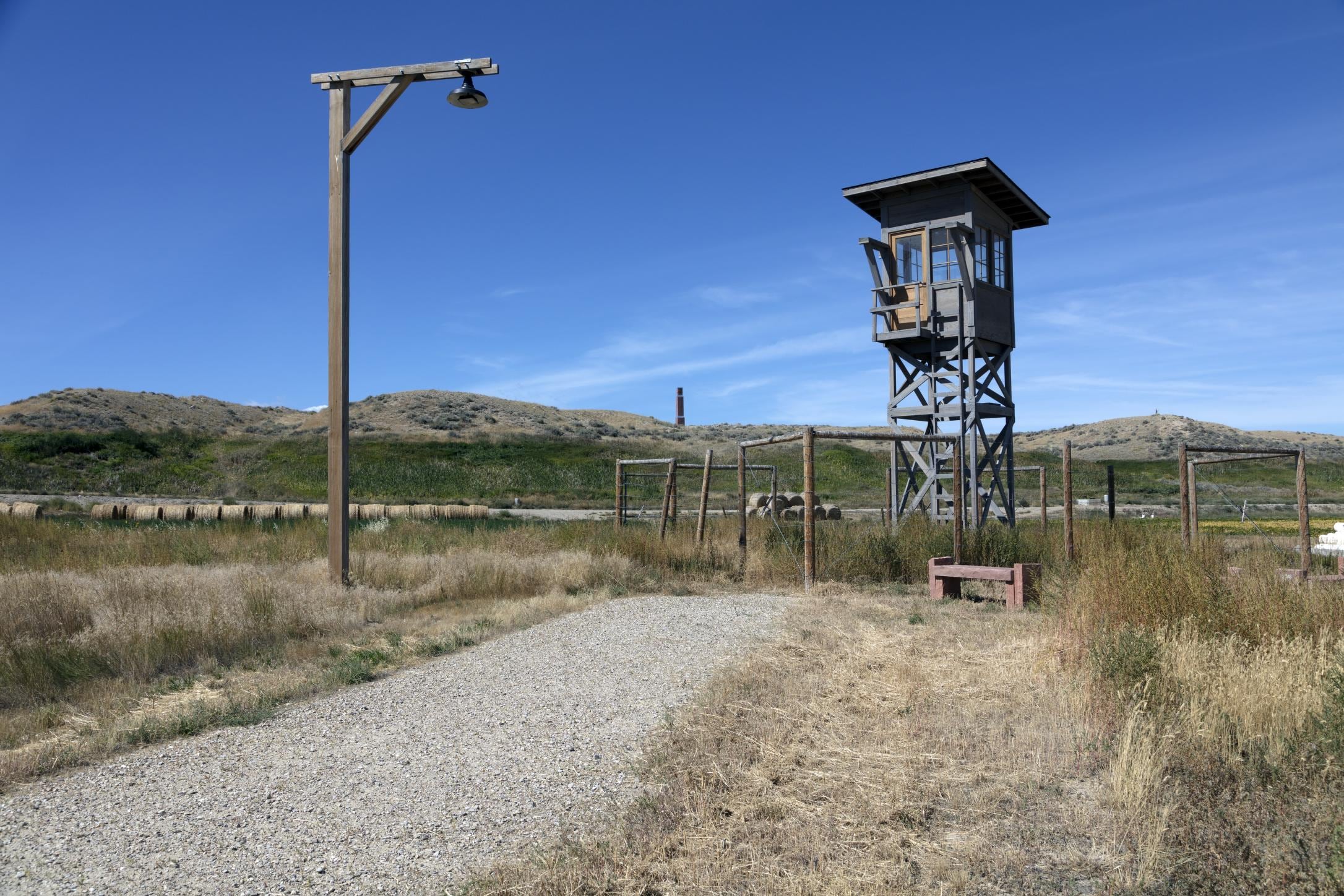
“I believe this draft law was not intended for me,” Okamoto wrote in a draft letter. “I was evacuated without due process of law; I am concentrated without due process of law; I was deported from my home state without due process of law; I am detained within barbed wire fences by force of military threat without due process of law; I exist within this militarily guarded enclosure as a Citizen without a Country without due process of law; the whole transaction effecting me is based upon unconstitutional interpretations without due process of law.”
Emi and Okamoto quoted the Constitution and Abraham Lincoln in subsequent bulletins posted around the camp.
The third bulletin, dated March 1, 1944, opened with the words of the Bill of Rights:
“No person shall be deprived of life, liberty, or property, without due process of law, nor private property be taken for public use without just compensation.” —Article V of the U.S. Bill of Rights.
“Neither slavery nor involuntary solitude, except as punishment for crime whereof the party shall have been duly convicted, shall exist within the United States, or any place subject to their jurisdiction.” —Article XIII of the U.S. Bill of Rights.
— National Archives
The men then ended the bulletin by stating their protest was an act of just civil disobedience due to the denial of their inalienable rights as U.S. citizens:
Thus, the members of the FPC unanimously decided at their last open meeting that until we are restored all our rights, all discriminatory features of the Selective Service abolished, and measures are taken to remedy the past injustices thru Judicial pronouncement or Congressional act, we feel that the present program of drafting us from this concentration camp is unjust, unconstitutional, and against all principles of civilized usage. Therefore, WE MEMBERS OF THE FAIR PLAY COMMITTEE HEREBY REFUSE TO GO TO THE PHYSICAL EXAMINATION OR TO THE INDUCTION IF OR WHEN WE ARE CALLED IN ORDER TO CONTEST THE ISSUE.
— National Archives
At the time, only one journalist, James Omura, from the Denver-based outlet Rocky Shimpo, reported on the protests and subsequent arrests.
On June 12, 1944, 63 resisters from Heart Mountain were tried for draft evasion. Twenty-two more would later resist.
At the mass trial, all of the men were convicted and sentenced to three years in federal prison. They were also denied a hearing before the Supreme Court.
In 1945, the 10th Circuit Court of Appeals overturned the convictions of seven FPC leaders, according to the National Archives. The court ruled their jury improperly ignored civil disobedience as a defense.
Omura, himself a Japanese American, was indicted for conspiracy to counsel draft evasion. He was eventually acquitted under First Amendment rights of the press.
Some of the remaining men were released in 1946, with the rest set free during the Christmas season of 1947, when President Harry Truman signed Proclamation 2762, pardoning 1,523 individuals convicted of violating the Selective Training and Service Act of 1940.
The resistance, however, divided Japanese Americans, with many, especially Nisei World War II veterans, calling it shameful or traitorous.
“I always thought those guys were a bunch of chickens,” veteran George Yoshinaga said in a 1993 interview, adding that if all of the Japanese Americans had refused, most Americans would have called them “disloyal.”
Emi and the other resistors, though, remained steadfast in their beliefs, according to fellow prisoner Yosh Kuromiya.
“[Emi] was quite adamant about it to the very end,” Kuromiya told the Los Angeles Times in 2010. “It was a matter of principle.”
Claire Barrett is an editor and military history correspondent for Military Times. She is also a World War II researcher with an unparalleled affinity for Sir Winston Churchill and Michigan football.