
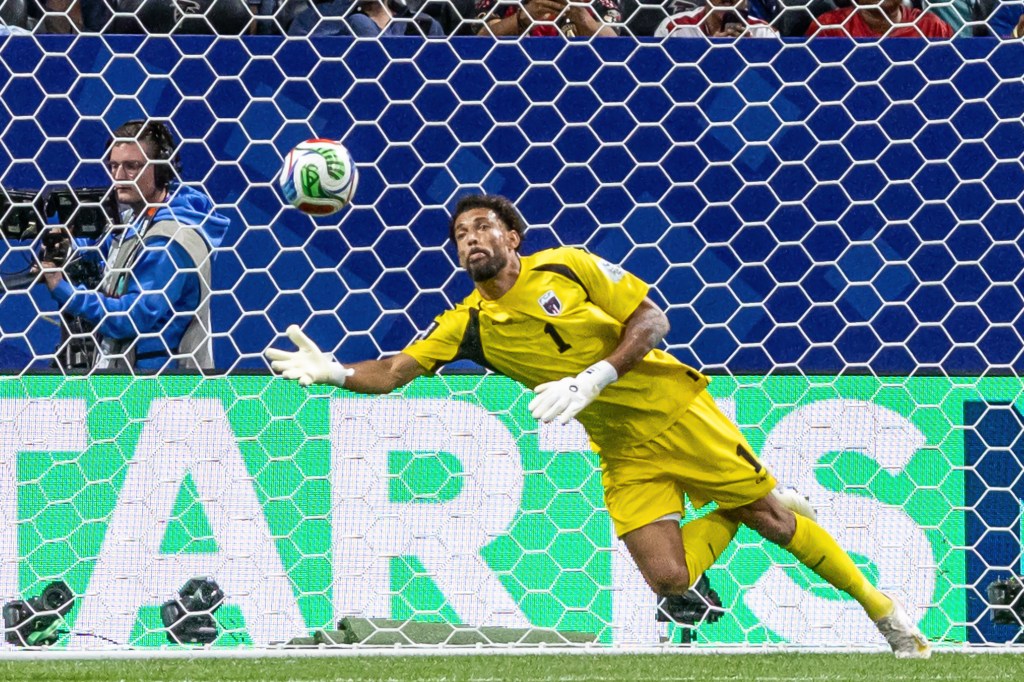
The battle over a visa for the mother of a revered soccer goalie has put a spotlight on the archipelago of Cape Verde, whose residents have a storied legacy of service in the U.S. military, including one sailor who some researchers consider to be the first African-born recipient of the Medal of Honor.
Forty-year-old goalie Josimar “Vozinha” Dias recently earned a certificate from the Guinness World Records book as “the oldest goalkeeper to keep a clean sheet” in a World Cup debut with his acrobatic play on June 15 for the Tubarões Azuis — Blue Sharks — of Cape Verde, turning away shot after shot to hold powerhouse Spain to 0-0 draw.
Cape Verde again produced a stunner on Sunday, coming from behind to earn a 2-2 draw with heavily favored Uruguay, a score that featured the tiny island nation’s first-ever goal in a World Cup.
“This means everything for our country,” Cape Verde coach Pedro Leitão Brito told the Associated Press. “We have always said that we wanted everybody to see our country, our team and we have shown organization and braveness and this is proof of what our country is about — resilience and to try to overcome hardships.”
Vozinha, however, was in tears after the June 15 match over the money and red tape for a visa that kept his mother from attending her son’s shutout of Spain.
“I cried after the game because I grew up with my grandparents when I was a kid, and they could not be there,” he told reporters. “They passed away a few years ago. My mum could not be here either for a visa issue, and the money we had to pay for it. We did not manage to do this in time.”
House Minority Leader Rep. Hakeem Jeffries (D-N.Y.), the only member of Congress of Cape Verdean descent, then worked with Secretary of State Marco Rubio to clear up the $15,000 visa issue.
“No mother should miss the chance to see her child make history,” Jeffries said in a statement. All fees were subsequently waived, Jeffries added.
Vozinha’s mother was in attendance on Sunday to watch her son against Uruguay. Cape Verde next plays on June 26 against Saudi Arabia, with a possible chance to punch their ticket to the elimination round on the line.
The goalie’s heroics and the flap over the visa, meanwhile, drew attention to the long history of the U.S. connection to Cape Verde, sometimes called Cabo Verde, an island chain and former Portuguese possession about 350 miles off the west coast of Africa.
In comments for a Smithsonian Magazine article, Donald Heflin, the former U.S ambassador to Cape Verde, noted, “Cabo Verdean Americans are one of [the U.S.’s] oldest immigrant communities, going back to the colonial whaling days.”
“We have the names of five Cabo Verdeans who fought in the American Revolution,” Heflin continued. “And their proud military tradition grows from there, with the numbers of Cabo Verdean Americans in uniform getting larger with each of America’s wars.”
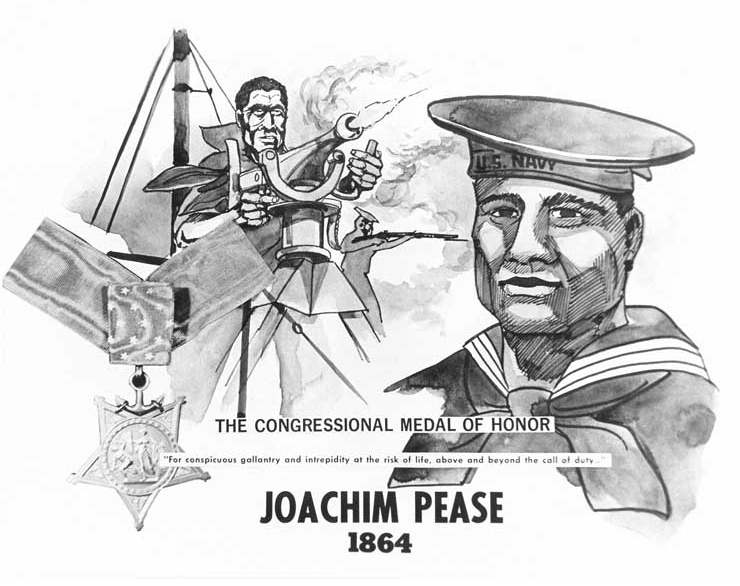
One of those Cape Verdeans was Joachim Pease, who served aboard the Union sloop of war Kearsarge during the June 19, 1864, epic battle against the Confederate raider Alabama off the French port of Cherbourg.
The Union Army was segregated at the time — the Navy was not. Aboard Kearsarge, Pease served as the loader on a 32-pounder gun that helped sink the Alabama, according to the Smithsonian article.
His Medal of Honor citation — considered by many to be the first for an African-born service member — said that he “exhibited marked coolness and good conduct and was highly recommended by the divisional officer for gallantry under fire.”
Pease disappeared after the Kearsarge returned to Boston. He was never located.
The Navy was unable to present him with the medal, which is now on display at the National Museum of the United States Navy in the Washington Navy Yard in Washington.