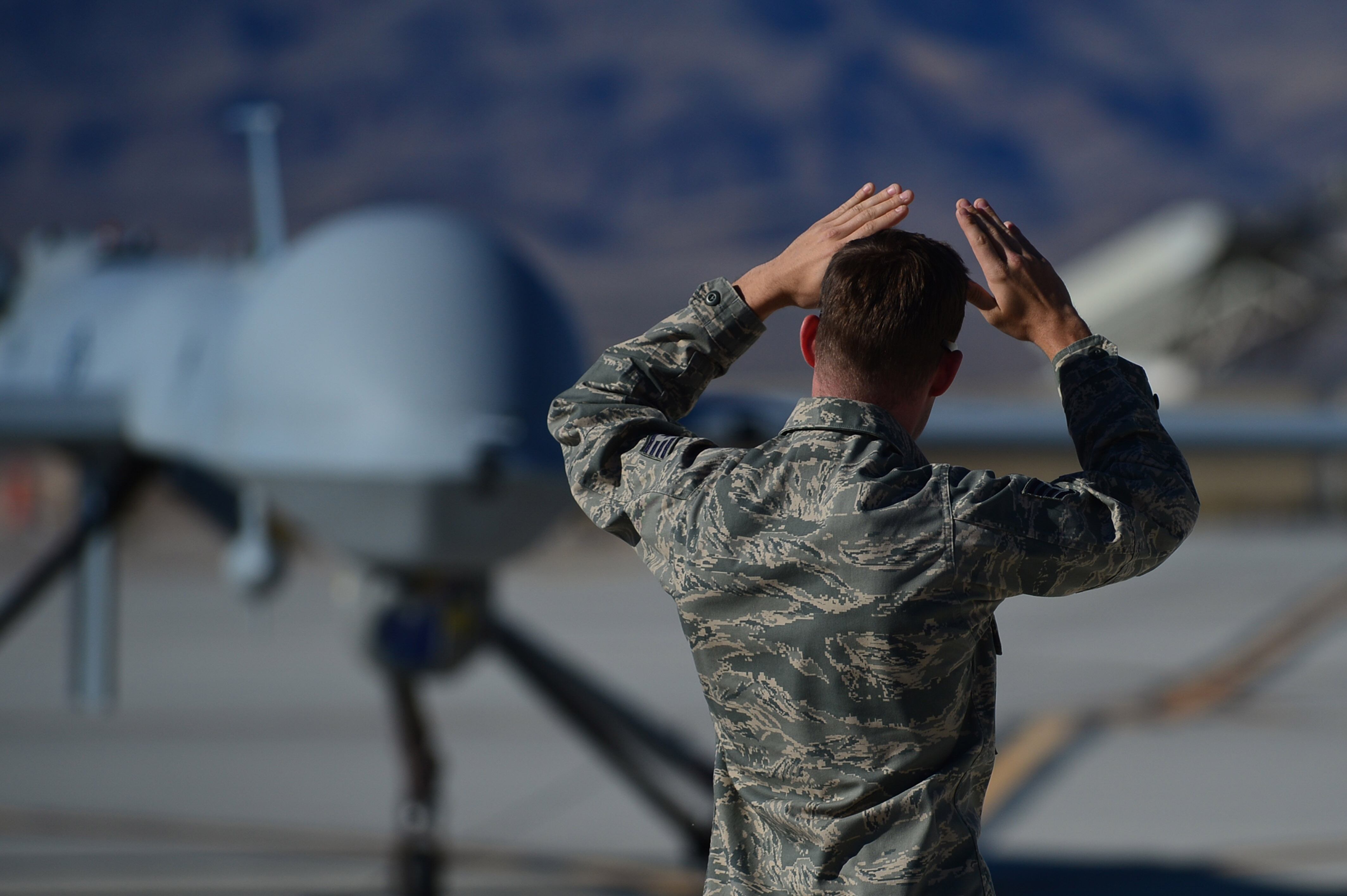
The Air Force is looking to relieve stress on drone pilots by reducing the number of missions they fly and hiring more contractor support.
The remotely piloted aircraft operators, who have been flying nonstop for years, will now fly 6065 missions per day instead of 6560, a service spokesman said.
"Sustained surge operations present risk in the areas of training, manning, retention and combat capability," Lt. Col. Christopher Karns told Air Force Times. "The RPA community has been operating at surge capacity for eight years. This pace cannot be sustained without accepting risk. The Air Force must take time and actions to normalize the tempo to ensure the viability of this platform and community for years to come."
In 2014, the Defense Department tried to reduce the number of combat air patrols that drone pilots fly to 55 per day as the U.S. mission in Afghanistan wound down. But that summer the Islamic State group conquered large parts of Iraq, so the U.S. suddenly needed more intelligence, surveillance and reconnaissance missions over Iraq and Syria.
A recent Government Accountability Office report found that the Air Force had 83 percent of the drone pilots it needs as of March. The report also found that only 35 percent of unmanned aircraft pilots had trained for all of the seven missions they are expected to fly due to pilot shortages and the crushing operations tempo.
Defense Secretary Ashton Carter decided in April to reduce the number of combat air patrols that drone operators fly to 60 per day by October, Karns said in an email. This is meant to allow more people to train as drone operators.
Lowering the number of combat air patrols will allow the Air Force to train more than 100 additional drone pilots per year, Chief of Staff Gen. Mark Welsh said in a news release on Tuesday. Right now, the Air Force needs to train 300 drone pilots per year, but it can only train 180 pilots per year.
Welsh has said the Air Force has not been able to train enough drone pilots because demand for unmanned aircraft missions is so great that the service cannot release seasoned pilots from flying missions to become training instructors.
The Air Force also plans to hire contractors to free up airmen to train drone pilots, Air Force Secretary Deborah Lee James said in Tuesday's news release.
Contractors' jobs will include helping to launch and land drones overseas and at Holloman Air Force Base, New Mexico, Karns said. "They are doing just the takeoffs and landings, not kinetic operations," he said.
Contractors will also be part of drone pilot training by working on simulators and teaching academics, he said. At Creech Air Force Base, Nevada, contractors are already performing these functions as well as serving in administrative functions and doing other tasks. The Air Force has not yet determined how many contractors it plans to hire.
The Air Force is under pressure to retain its drone pilots, who can earn twice as much money as they make in the Air Force by working as contractors in Iraq, Afghanistan and other austere locations overseas. For drone pilots who have complained that they are not getting promoted and feel as if they are being treated as second-class pilots, life as a contractor could be an attractive prospect.
In two years, a large number of 18X drone pilots, who have been trained to fly only unmanned aircraft, will reach the end of their active-duty service commitments, Welsh said on April 2. He also said he understands many drone pilots will leave the Air Force if they feel the service will not make life better for them.
Earlier this year, the Air Force increased the monthly flight pay for 18X drone pilots from $650 to $1,500 if they keep flying unmanned aircraft beyond their six-year commitments. But the GAO report noted that only four pilots are eligible for the increased pay.
The Air Force is considering offering 18X pilots a critical skills retention bonus next fiscal year in lieu of the increased flight pay.
"The demand for ISR [intelligence, surveillance and reconnaissance] capability will always exist," James said in Tuesday's news release. "We are focused on developing and managing ISR assets to be agile and responsive enough to support global and theater requirements in a seamless manner while at the same time, managing the stress on airmen. We are taking action to provide near-term operational relief while addressing quality of life concerns."