ready to edit
FB: Clear communication. Welsh says the biggest threat to retention isn’t cuts to benefits, it’s explaining the Air Force’s decisions to airmen.
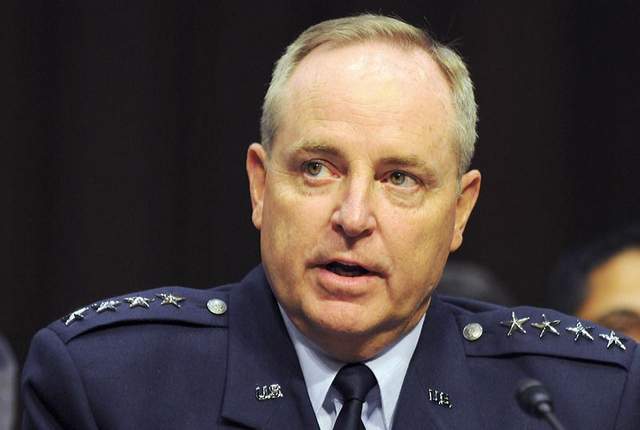
The biggest threats to Air Force retention in the futurearen’t cuts to pay and benefits, it’s the failure of Air Force leaders — especially midlevel commanders — to help the force understand the budget situation, Chief of Staff Gen. Mark Welsh said Thursday.
a greater misunderstanding of the force of what is actually happening, and that is due to a failure by many in the Air Force to effectively explain the real situation,
Air Force
But “The biggest thing that affects retention is an understanding by the force of what is happening,” Welsh said April 2 at an Air Force Association speech in Arlington, Virginia. “It’s a failure because communicating broadly to the Air Force is hard,” Welsh said at an Air Force Association speech in Arlington, Virginia. “ … We’ve tried everything. … They’re not hearing it.”
The message, Welsh told his audience: “All this stuff is going to be fine, as long as you do your job well. If it becomes an issue, I will tell you.”
Most of the units in the Air Force are not going to be touched by most budget issues, he said. Airmen will still get the best education and training they can get.
“We are still going to give you the opportunity to do the coolest stuff on Earth,” he said. “We’re going to get out of the way and let you dominate. We need to get back to focusing on what the Air Force does, not how the Air Force is affected. I got that, I’ll keep you posted.”
Airmen across the world hear the bad news quickly, such as cuts to benefits or uncertainty about pay, but the real story of why changes are happening and what the impact will be gets lost because mid-level commanders aren’t effective in telling their airmen, and the airmen themselves aren’t seeking out information, Welsh said.
“We worked this hard,” Welsh said. “Somewhere in the middle, we have to be more aggressive about getting information to people. And those people can’t sit back and wait for information to appear on their phone,” he said.
To illustrate his point, Welsh used the example of tuition assistance. In 2013, the Air Force cut tuition assistance when sequestration went into effect. The day the Defense Department made the decision, the Air Force posted the news about it on social media and on base websites. Then, on base visits, Welsh encountered “hangars full of people” upset about the move. But he asked them if they knew why the decision was made, and no one raised their hands, he said.
“This is my No. 1 topic of conversation everywhere I go in the Air Force,” Welsh said. “The key isn’t technology, it’s people.”
Going forward, the service is trying new ways to communicate changes to airmen, such as and placing a greater responsibility emphasis on leaders to spread the news.
But hopefully, news of budget cuts that won’t be as necessary.
“We went through terrible force shaping to get the Air Force down to the size we could afford,” Welsh said. “We’re all moving forward now together. There’s no intent to get any smaller.”
The service has cut its force structure to the point where it cannot be cut anymore, and Welsh said it is clear now, from both Pentagon and Capitol Hill leadership, that no more excessive cuts can happen. The growth of benefits needs to be curbed to give the Defense Department enough funding to keep up readiness and modernization, but those cuts it won’t be excessive, he said.
“Nobody’s going to let our people get screwed on this,” Welsh said. “No one has that intent at all. The Congress, the department, everybody has been immensely supportive of pay and benefits in the recent past. We just can’t continue on that same cost curve. We need to get it off to a manageable growth curve.”
Even if under funding restrictions are revived under put in place by the Budget Control Act, the service can’t get smaller to do the job it needs to do, Welsh said.
“You got to trust us a little bit,” Welsh said. “All this stuff is going to be fine, as long as you do your job well. If it becomes an issue, I will tell you.”
Most of the units in the Air Force are not going to be touched by most budget issues, he said. Airmen will still get the best education and training they can get.
“We are still going to give you the opportunity to do the coolest stuff on Earth,” he said. “We’re going to get out of the way and let you dominate. We need to get back to focusing on what the Air Force does, not how the Air Force is affected. I got that, I’ll keep you posted.”