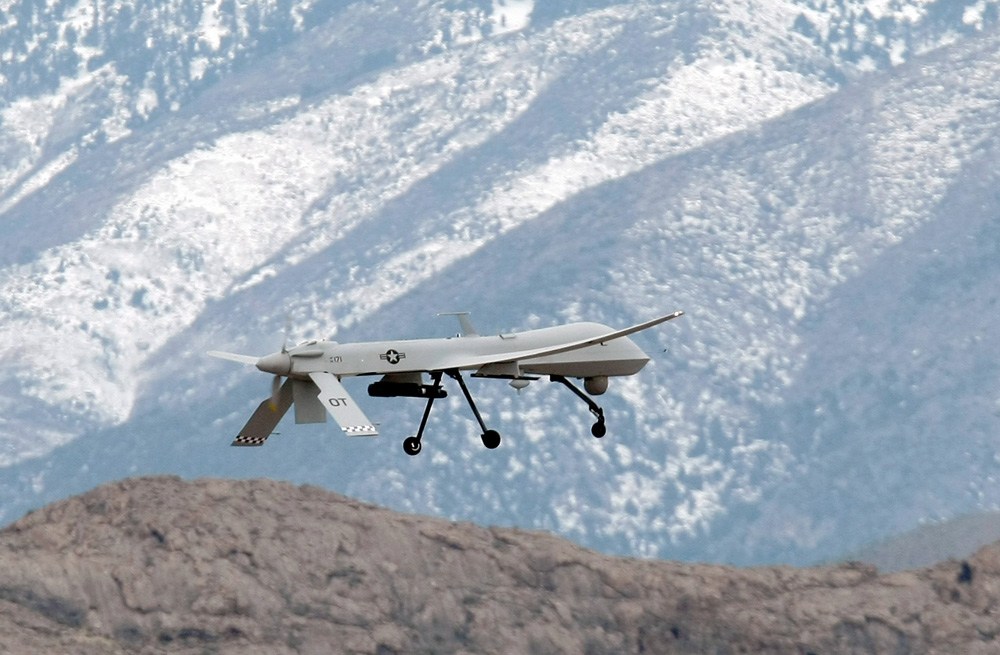
A mechanical failure caused an MQ-1B Predator to crash on Nov. 8, 2015, in U.S. Central Command’s area of operations, according to Air Combat Command.
The mechanical failure occurred in the drone’s “left tail clamp and/or tail clamp bolts,” according to an Air Combat Command Accident Investigation Board report released Monday.
“The aircraft entered an unrecoverable spin and the impact destroyed the aircraft,” according to the report. “All indications are that the maintenance personnel correctly complied with all maintenance actions and were not a factor to this mishap.”
The Predator was destroyed, and its loss is valued at roughly $5.3 million, according to the report.
Although the report does not specify the country where the crash occurred, CENTCOM’s area of operations includes Afghanistan, Iraq and other countries in the Middle East, as well as parts of North Africa and Central Asia.
The Predator was assigned to the 432nd Wing at Creech Air Force Base, Nevada, and operated by a launch and recovery element from the 46th Expeditionary Reconnaissance Squadron at a deployed location in theater.
While supporting combat operations, the drone encountered a failure with its Outside Air Temperature sensor and began to return to base, the report reads.
On descent for landing, the drone pilot began to work through an arrival checklist, at which time the failure on the left tail began.
The investigation found that the mechanical failure caused an in-flight loss of the left tail insert and attached left tail.
When the pilot alternated left and right inputs, the additional mechanical and aerodynamic loads broke an already weakened left tail from the aircraft.
The pilot struggled to regain control of the drone following the loss of the left tail, according to the report. The aircraft crashed after 27 seconds of uncontrolled flight. There were no reported injuries or damage to government or private property, according to the report.
The drone was inverted at the time of impact, and the subsequent fire destroyed the aircraft while keeping the debris field relatively consolidated, according to recovery personnel sent to the scene.
”The recovery crew searched the area surrounding the crash site for several miles, but no additional pieces were recovered,” the report reads.
The crew never found the left tail and left tail insert, nor did they find the left tail clamp or clamp bolts, according to the report.
The aircraft’s left and right tails likely had 4,861.8 and 3,126.8 flight hours, respectively, according to the report.
The report concluded that the drone had been properly maintained and had experienced no abnormal in-flight behavior prior to the incident. In addition, the report found there “were no human factors applicable to this mishap.”