Special Operations Command, or SOCOM, issued a sole-source contract to Teamworks Tactical Solutions, the maker of a nutrition app.
According to the statement of work, the app will provide dietitian services to SOCOM troops by coordinating with dining halls to develop meal plans that “optimize human performance and lethality.”
The platform will connect a team of up to 55 performance dietitians to provide “personalized, mission-specific nutrition plans” for more than 18,000 tactical troops across geographically disparate locations, according to the document.
Teamworks Tactical Solutions’ “core business,” according to James Coffos, Teamworks’ chief strategy officer, includes working with Division 1 athletes to professional and Olympic-level athletes.
“With stakes literally being life and death in the tactical context,” Coffos said, “when looking at a software platform to run your HP program, it makes sense to look to a system like Teamworks, which has been proven at the very highest levels of human performance.”
The contract comes as the Pentagon works to improve fitness standards and rally against “fat” troops, but Coffos said the app has already been in use by the U.S. military.
“SOCOM has actually used this particular product for years, so this isn’t an entirely new capability for them,” he said in an email to Military Times.
The original contract was through the Air Force Research Laboratory’s STRONG Lab, but the new contract moves the agreement directly to SOCOM.
Coffos said his company worked with SOCOM’s senior performance dietitian to tune the software to better suit the organization’s needs.
“It’s really a great situation where we have this virtuous circle from sport to military and back again,” he said.
The app allows SOCOM troops to engage with dietitians in two ways. They can see nutritional ratings for options at the chow hall, or, when military dining facilities are not available, they can ask for guidance regarding the food available to them.
“It just removes a lot of friction from the process of making good decisions around what you’re eating, and that in turn frees an operator up to focus on the mission at hand,” Coffos said.
Troops can also adjust their plans based on food preferences and personal goals. But the technology does not eliminate the need for individual decision-making, Coffos said.
“You still have to have a basic understanding of nutrition and the willpower to choose what your body needs versus what just looks like it tastes best,” he said.
As for how the app improves “lethality” through diet, Coffos explained it depends on how the term is defined.
“I’d start by pointing out that ‘lethality’ is SOCOM’s word, not ours,” he said. “But I’d also gently point out that the word isn’t at all foreign to sports.”
He explained that it’s often used to describe performance by professional athletes, like “Mariano Rivera was described as lethal for 19 seasons and no one thought twice about it” or “Steph Curry is lethal from 30 feet.”
But he has come to understand the term, at least in the case of SOCOM, as a reference to maintaining physical performance deep into an arduous mission.
“When SOCOM writes ‘lethality,’ I really think what they’re describing is the mile-22 problem,” he said. “It’s about the quality of the human being at the end of the effort, not the beginning.”
He compared the nutritional demands of a special operator on a long mission to those of a marathon runner nearing the end of a race.
“Watch a marathon at mile 22. You’re absolutely going to see somebody who was running beautifully at mile 18 reduced to a shuffle, and it isn’t because they got less fit in the last four miles. They ran out of fuel,” he said.
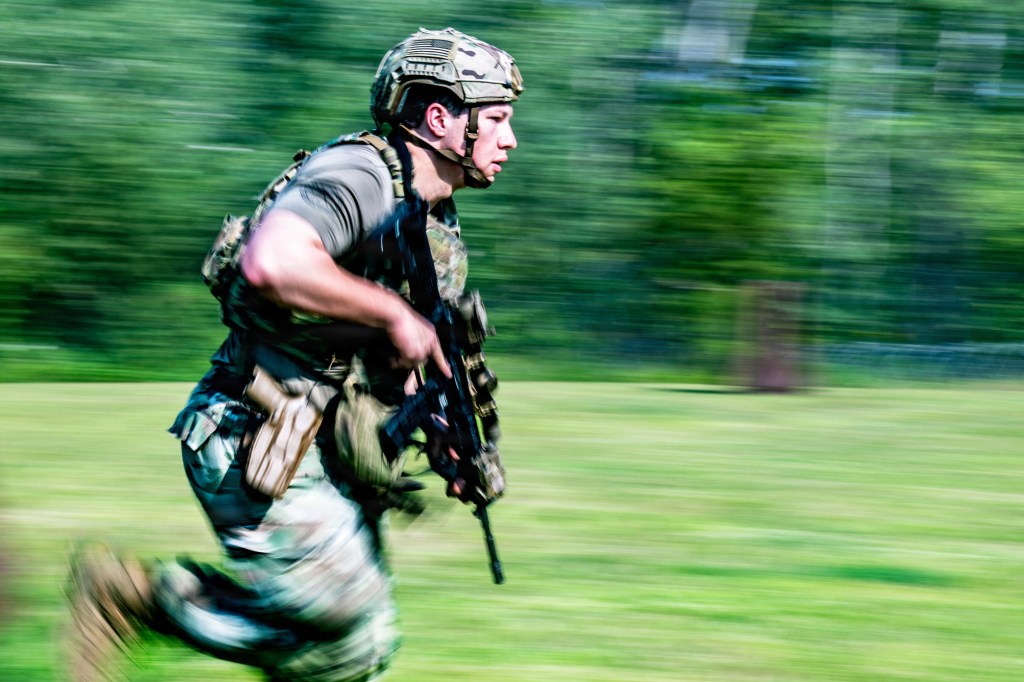
In the case of SOCOM, Coffos said, imagine an operator about 20 hours into a mission, carrying about 65 pounds of gear and running on about four hours of sleep.
“That’s the same physiology and the stakes are the only thing that changed,” he said. “When SOCOM writes ‘lethality,’ I really think what they’re describing is the mile-22 problem.”