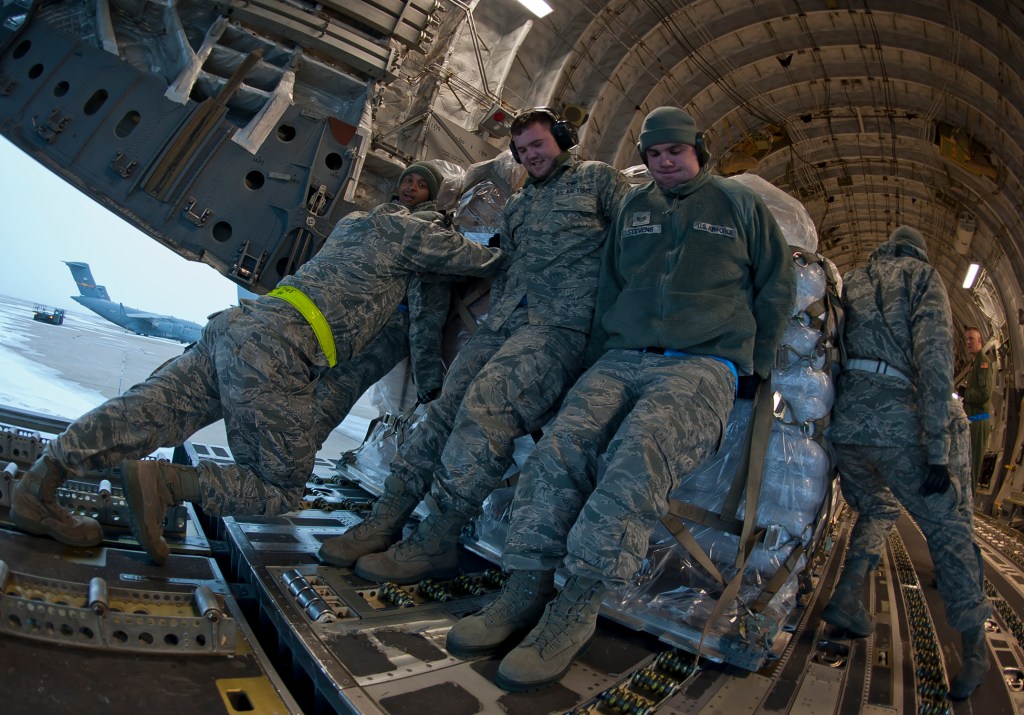
The pace of operations at Air Mobility Command brings one mission every 2.8 minutes. From the war on the Islamic State group to the earthquake in Nepal to the supplying of researchers in Antarctica, the pace has grown 25 per-cent in the first half of this year.
That’s the job of shipping personnel and equipment, shuttling supplies to humanitarian sites, evacuating the wounded and refueling airplanes.
And when airmen get back to base, a mass of paperwork and other duties keep them working into the nights and weekends.
“Our ops tempo is not going down one bit,” Vice Chief of Staff Gen. Larry Spencer told Air Force Times. “Yet there’s clamor to have the resources go down. So you’ve got the lines on the chart going in opposite directions.”
When the crush of requirements expanded between 2001 and 2012, all of the services grew. But the anticipated lull from the “end” of the wars in Iraq and Afghanistan never came. In fact, demand increased as new operations were created to attack the Islamic State and other threats.
All of this has landed on the backs of fewer airmen because the Air Force has cut some 20,000 of them in the past two years, creating the smallest Air Force since it was created in 1947.
Though the 2016 defense budget calls for the Air Force to add 4,000 people, it will take time for them to join the missions. The brass has to reduce what it demands of airmen or it will see highly trained airmen drained off by generous offers from airlines and the rest of industry seeking their in-demand skills.
If it is determined that current op tempo must be maintained in the best interests of national security, then Congress has a duty to do the responsible thing and provide the people and money necessary to meet that without continuing to force airmen to bear a crushing workload.