ORLANDO, Fla. — The Obama administration is “conservative” in outlining a three-year window for continued operations against the Islamic State as outlined by the administration in its push for military authorization is a “conservative’ estimate as the demand for U.S. air power in the Middle East is expected to stay for years, the head of Air Combat Command said Thursday today.
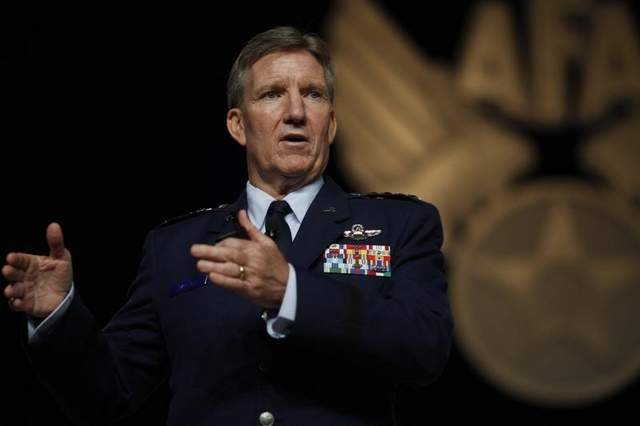
The number of fighter units deployed to the Middle East has increased as Operation Inherent Resolve continues, and U.S. Air Force units have “more missions and more requirements than we have money, manpower and time,” ACC Commander Gen. Hawk Carlisle said at the Air Force Association conference here this morning in Orlando, Florida.
President Obama this week sent Congress language to Capitol Hill on a proposed Authorization on the Use of Military Force to combat Islamic State fighters in Iraq and Syria, with a plan for three years of to have a three-year window for continued operations against the group, including along with possible use of Special Forces on the ground and as well as continued air operations.
“Three years is conservative,” Carlisle said. “I think that U.S. airpower in the Middle East is going to be desired for a long time.”
The continued Inherent Resolve operations come , coming as crews were expected to wind down operations in Afghanistan. Air combat , have had an impact on combat air force units back in the U.S., who are facing more deployments in the Middle East region. Congress provided the Air Force with a “respite” on funding to increase readiness following the fiscal 2013 sequestration-forced stand down, allowing the service to “turn the corner” and increase the capability of its pilots. The budget situation in the next three years will dictate Air Combat Command’s ability to meet the requirements for continued operations in the Middle East as part of the continued operations, along with demands of other combatant commands across the world, Carlisle said.
“We have to figure out how to win today’s fight, whatever it takes to do that,” Carlisle said.
One challenge part of the air fight in the Middle East air fight that has been overstretched is intelligence, surveillance and reconnaissance. The Air Force needs more drone pilots to address a constantly increasing need for additional surveillance, especially as Inherent Resolve continues.
“We are not producing enough [pilots], and the demand continues to go up,” Carlisle said.
Because of the The Air Force has faced a constantly increasing demand for ISR, which has meant the service never was able to “normalize the system” for pilot training and development. The service has faced eight surges in required flights with no the amount of flights it has been required to fly, and there has never been an opportunity to establish the right-sized flying training unit and the right number of instructors.
Currently, Air Force MQ-1B Predator and MQ-9 Reaper instructor pilots are pulling double duty, training pilots while also flying operational missions, Carlisle said.
“We are not producing enough in the beginning,” Carlisle said. “We can’t produce enough given how many [pilots] we are losing. So building that capacity is something we have to be able to do.”
Last month, Air Force Secretary Deborah Lee James announced new incentives for drone pilots to keep them flying, including increased pay levels. This move partly stemmed from a memo from Carlisle to Air Force Chief of Staff Gen. Mark Welsh saying there is a “seriously problem” in the remotely piloted aircraft enterprise.
ACC chief: Iraq, Syria fight will stretch combat units