Staff Sgt. Seth Pena remembers nothing about the day that changed everything.
When he awoke in the hospital from a medically-induced coma on March 22, 2013, nearly three weeks had gone by since a drunk driver plowed into his motorcycle and left him an amputee.
A nurse pulled back the sheets and showed Pena what he had lost.
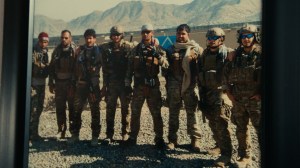
The tactical air control party member had survived deployments to Iraq and Afghanistan where he called in close air support under a rain of enemy fire. During one coordinated Taliban attack on a combat outpost in the Paktika province in November 2011, Pena coordinated airstrikes that killed some 70 insurgents.
But danger didn’t just lurk in the desert. A soldier had been driving the car that struck Pena outside Fort Stewart, Georgia.
“I remember being angry,” Pena said.
Depression followed. The life he’d envisioned since he was a child growing up in Oregon was over.
Pena was still recovering when his mother mentioned the Warrior Games. A long-time hobby would soon turn to passionate pursuit — bringing with it a much-needed sense of normalcy.
Pena, 33, wanted to serve his country long before the terrorist attacks of Sept. 11, 2001. His grandfather had fought for the Marine Corps on the beaches of Manila Bay in the Philippines during World Word II, stories his mother recounted.
Pena’s parents preferred he go to college after high school, and he did for awhile, majoring in physics and engineering while working full time at a plywood mill.
“That was very difficult to balance, to say the least,” Pena said. “I went to an Air Force recruiter in Oregon, spoke with them, looked at different options for career paths. I eventually decided to sign up” in 2005.
“My parents choice for me would not have been the military, but they supported me fully once I made that choice,” he said.
Pena earned his TACP beret about a year after finishing technical training. Early on, he felt a kinship with airmen who shared his career field.
“They’re really just a breed apart,” he said. “We’re the only job in the Air Force that is specifically ground fighting. I got to do an important job that is critical in many ways.”
Pena deployed to Iraq in 2007, to Afghanistan in 2009 and 2011. He’d been home a little more than a year when the crash happened.
With no memory of what happened, Pena listened as others filled in the blanks: The soldier who struck him had run a red light and was stopped from fleeing the crash site by another soldier who’d witnessed it. The same good Samaritan had then tied a tourniquet around Pena’s leg that probably saved his life. Medics brought him back from the brink twice after his heart stopped.
The injuries were catastrophic: Traumatic brain injury, broken bones, a collapsed lung and torn aorta. Doctors amputated his badly damaged left leg first below the knee and then above.
Pena can recall the voices of his squadron buddies shouting encouragements in his hospital room early on. He remembers the slow, foggy return to consciousness after 20 days, feeling his parents squeeze his hands.
“I kind of didn’t realize all that was happening,” he said. “It was comforting just to hear my folks were there.”
Pena spent six months in the hospital before transferring to the 59th Medical Wing Patient Squadron at Joint Base San Antonio-Lackland.
“My mom was talking about Paralympics and everything,” he said.
Pena had picked up archery before the accident, even had a small bow of his own. “It was something I could still do.”
Soon, Pena was practicing archery and shooting — another hobby from his old life — several hours a week. He bought new equipment and became ambidextrous.
“I am more accurate that I was even before” the accident,” he said. “I don’t know how that works.”
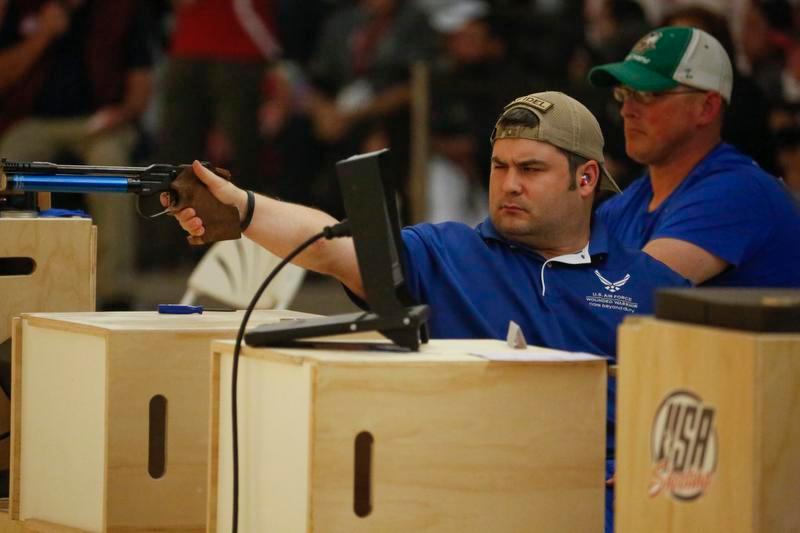
Earlier this month, Pena got a chance to compete in the Warrior Games in Colorado Springs, where he won gold in shooting — a first for the Air Force, he said. He expects to be medically retired in the future and wants to earn a game design degree from Full Sail University in Florida.
Until then, Pena spends some of his duty days at the TACP preparatory course at Lackland where, he said, “I get to be around the type of guys I was used to being around for years.”
He spends much of his free time practicing archery and shooting, which continue to play an integral role in his healing.
“When life changing stuff like losing a limb happens, it is pretty common for people to look for those things that give them a sense of normalcy,” Pena said. “I like those feelings of normalcy and those things I used to do. I don’t like feeling like there’s anything I can’t do now.”
See more: