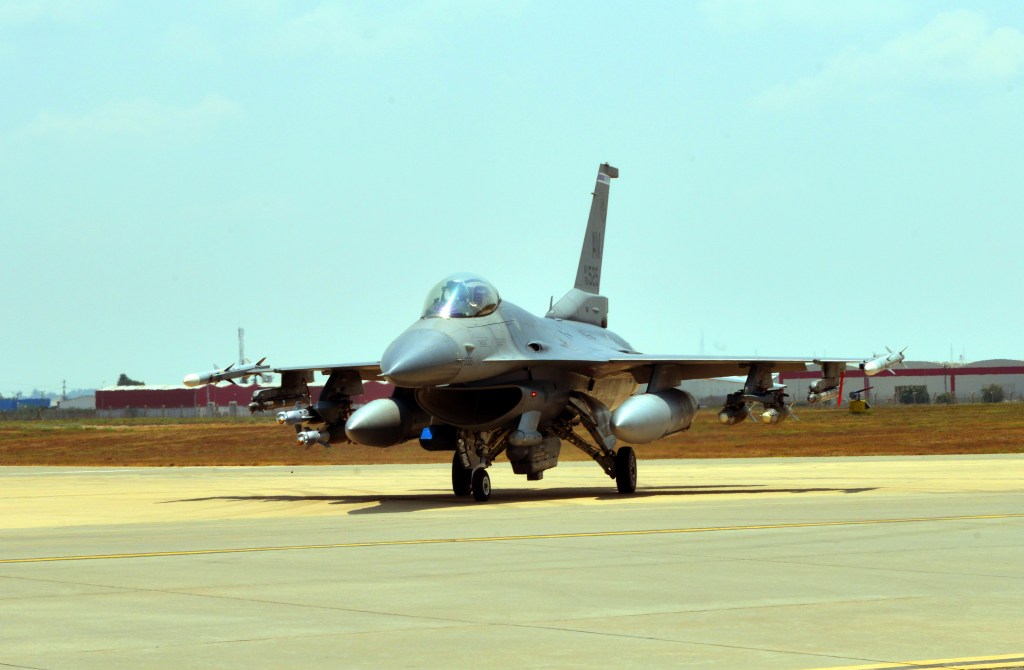
The Air Force has the largest operational role in fighting the Islamic State group, including carrying out most of the coalition airstrikes.
But Air Combat Command needs to weigh its role against the increasing stress on airmen, said Gen. Hawk Carlisle, ACC commander.
“We have the smallest Air Force we’ve ever had at the same time we’re facing insatiable demand for our capabilities,” he said. “Together, this drives a continually high operations tempo, which impacts our airmen and families … in a lot of negative ways.”
“We are constantly weighing the capability, readiness, capacity and tempo of active and reserve forces to ensure the right mix to meet requirements,” Carlisle added.
Some areas are especially feeling the strain, including the operation of remotely piloted aircraft, the general said.
“In the RPA community, we’ve been operating at surge levels for so long that we’ve risked its long-term viability,” Carlisle said.
ACC has tried to reduce some of the stress on drone pilots by adding increased pay and bonuses, expanding the criteria of which pilots can fly the craft, and relying on contractors for non-kinetic operations, he said.
But because of the high op tempo, ACC is getting results in the war against the Islamic State, also known as ISIL, the general said.
“I think the statistics from Operation Inherent Resolve speak for themselves,” Carlisle said. “From the start of kinetic operations on Aug. 8, 2014, through August 2015, the Air Force has conducted approximately two-thirds of the more than 6,200 strikes in Iraq and Syria. That’s an amazing application of decisive combat air power that has significantly reduced ISIL’s freedom of movement in nearly a third of the area in Iraq.”
Beyond the destruction of enemy weapons and vehicles, air power can have other less tangible benefits, such as providing allies more time to operate or making terrorists cautious about taking action for fear of being bombed.
“Simply put, persistent air coverage allows us to continually exploit the enemy’s weaknesses,” Carlisle said.
“With ISIL on the defensive, we are able to generate critical time and space for our partners on the ground to train and field more fighting capacity,” he said.
In one of the past year’s biggest developments, Turkey decided to allow the U.S. and other coalition members to use its airbases to carry out strikes in Syria and Iraq.
“Turkey, along with other coalition nations in the region, is committed to degrading and ultimately destroying ISIL,” Carlisle said. “Less distance from launch to target means less flight time required, less fuel required and a faster response time.”
Carlisle said he believes international cooperation is strong in “defeating a barbaric enemy.”
“While individual countries may sometimes shift their efforts based on their own national priorities, every indication we’ve seen is that our partners remain committed to the fight against ISIL,” he said.
But Carlisle said he’s concerned about the possibility of Congress passing another continuing resolution or a second round of sequestration that could cut military budgets.
“From my perspective, it is a national imperative to recapitalize our aging legacy fighter fleet in order to maintain our air superiority advantage today,” he said. “Uncertainty is a threat to recap and modernization, and it significantly increases risk to our ability to provide dominant combat air power. … Our leaders have said it time and again: If we don’t return to a predictable and stable budgetary environment we are essentially risking our future effectiveness.”