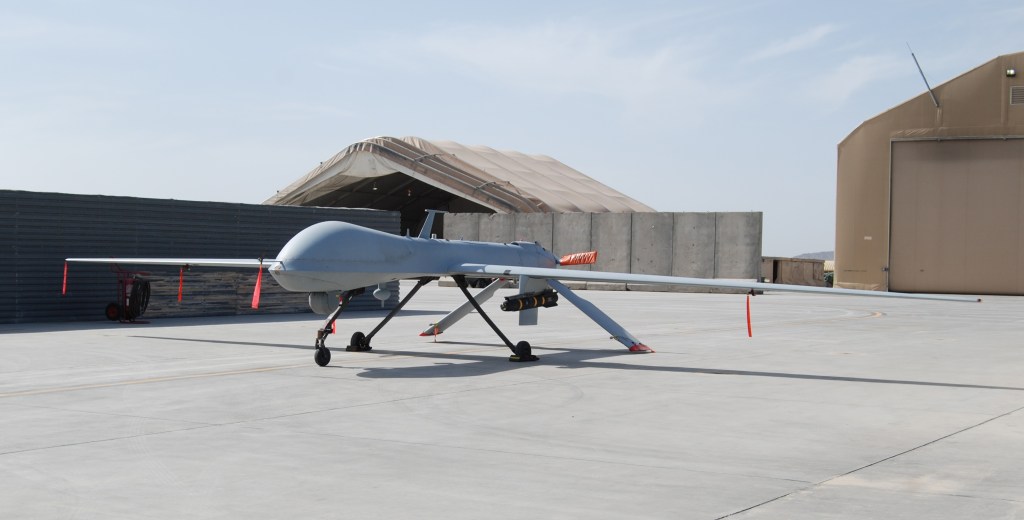
Turbulence and the failure of a turbocharger in an MC-1B Predator caused the drone to crash last year in Afghanistan, the Air Force announced Thursday today.
On June 25, 2014, the Predator was flying a mission in the mountains north of Jalalabad when it encountered turbulence. The drone’s turbocharger failed as it attempted to maintain its mission altitude. Downdrafts during the flight caused the Predator to be unable to maintain its safe altitude. The drone’s turbocharger failed as it attempted to maintain its mission altitude, and the aircraft drone crashed into the mountains, according to an Air Combat Command abbreviated accident investigation board report released today.
The aircraft, assigned to the 432nd Wing at Creech Air Force Base, Nevada, was destroyed at a loss of approximately $4.8 million. There were no injuries or damage to private property.
Crews were unable to recover the wreckage of the drone, so investigators were unable to pinpoint an exact cause for the failure of the turbocharger, according to Air Combat Command. However, the manufacturer said that the symptoms of the failure were similar to other instances of oil “coking” due to excessive pressure. When Coking means oil breaks down at a high temperature, it causes causing a solid residue that prevents the turbocharger from spinning, according to ACC.