
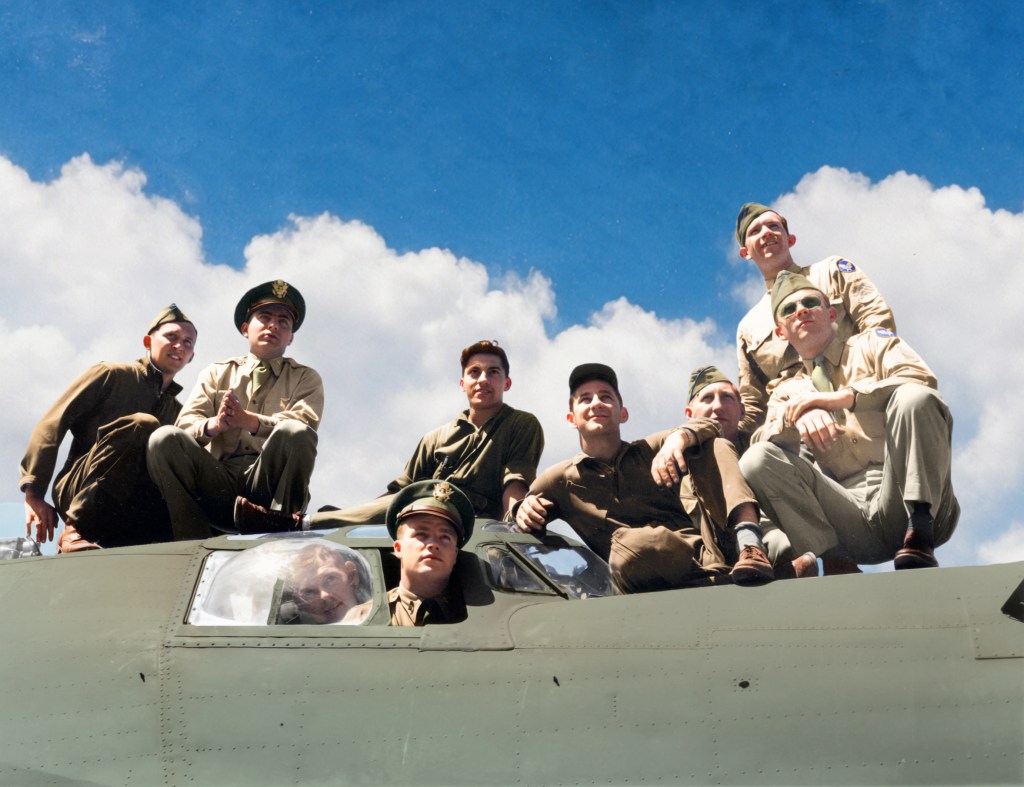
Bruised and battered, the crew of the Chattanooga Choo Choo were held as prisoners in the complete darkness of an abandoned cistern in rural Romania.
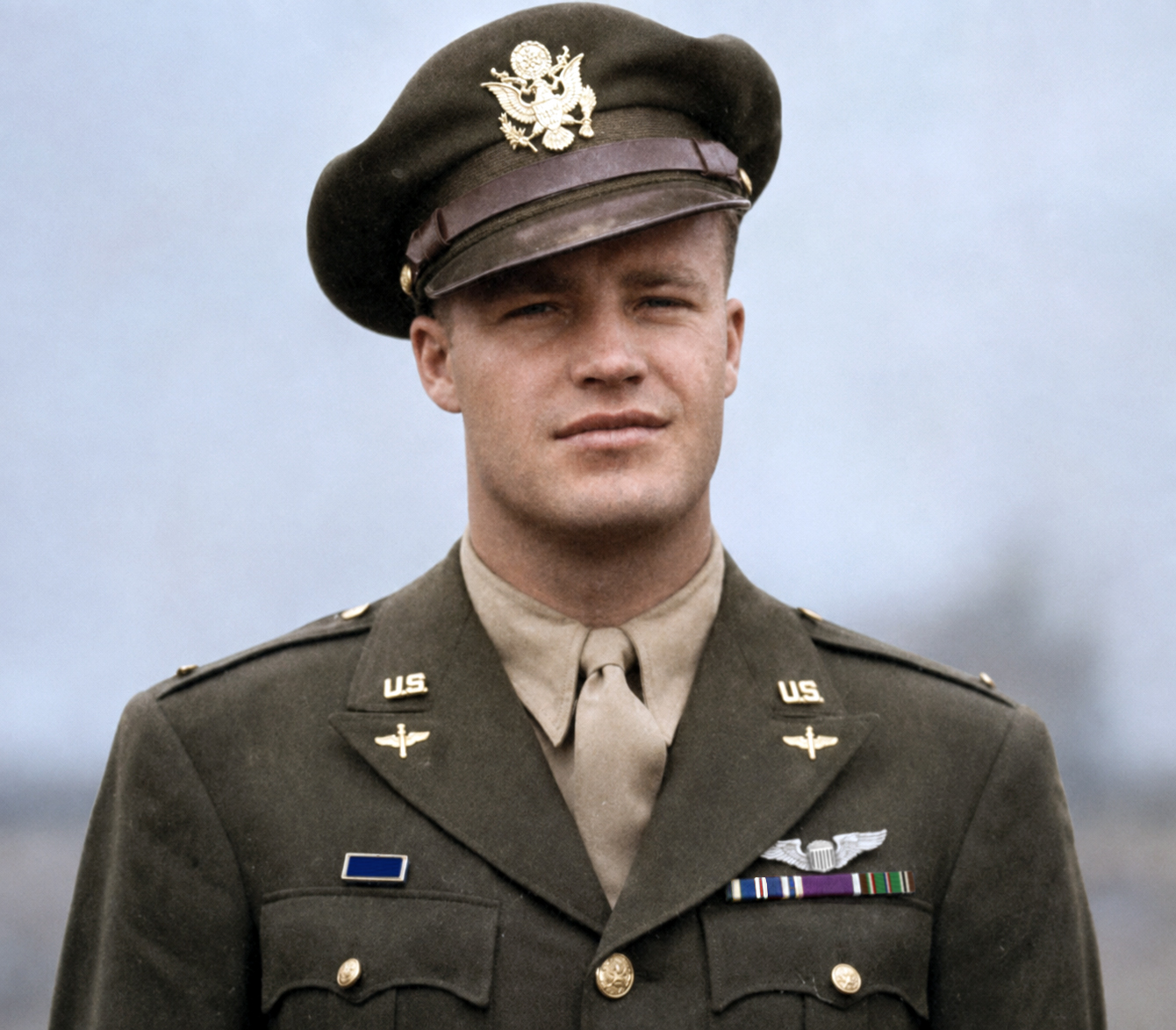
On Aug. 1, 1943, Lt. Ernie Poulson co-piloted the Consolidated B-24 Liberator on a low-level bombing run of an oil refinery in Campina — part of the deadly American aerial raid of the Ploesti oil fields, codenamed Operation Tidal Wave. His aircraft was one of 53 lost that day. Paulson and his crew crash-landed on a river bank and were taken captive by the Romanian home guard.
As they awaited their fate in that dank, dark pit, the young American airmen could hear a commotion above them. Suddenly, a trap door opened and a head appeared. A woman’s voice spoke to them in heavily accented English:
“Hello, boys. There are only friends here. Now come up and let us help you.”
Poulson and the others didn’t know it at the time but they had just been saved by a guardian angel. Princess Catherine Caradja, a member of Romanian royalty, was now responsible for their lives as the hell of World War II raged around them in Europe.
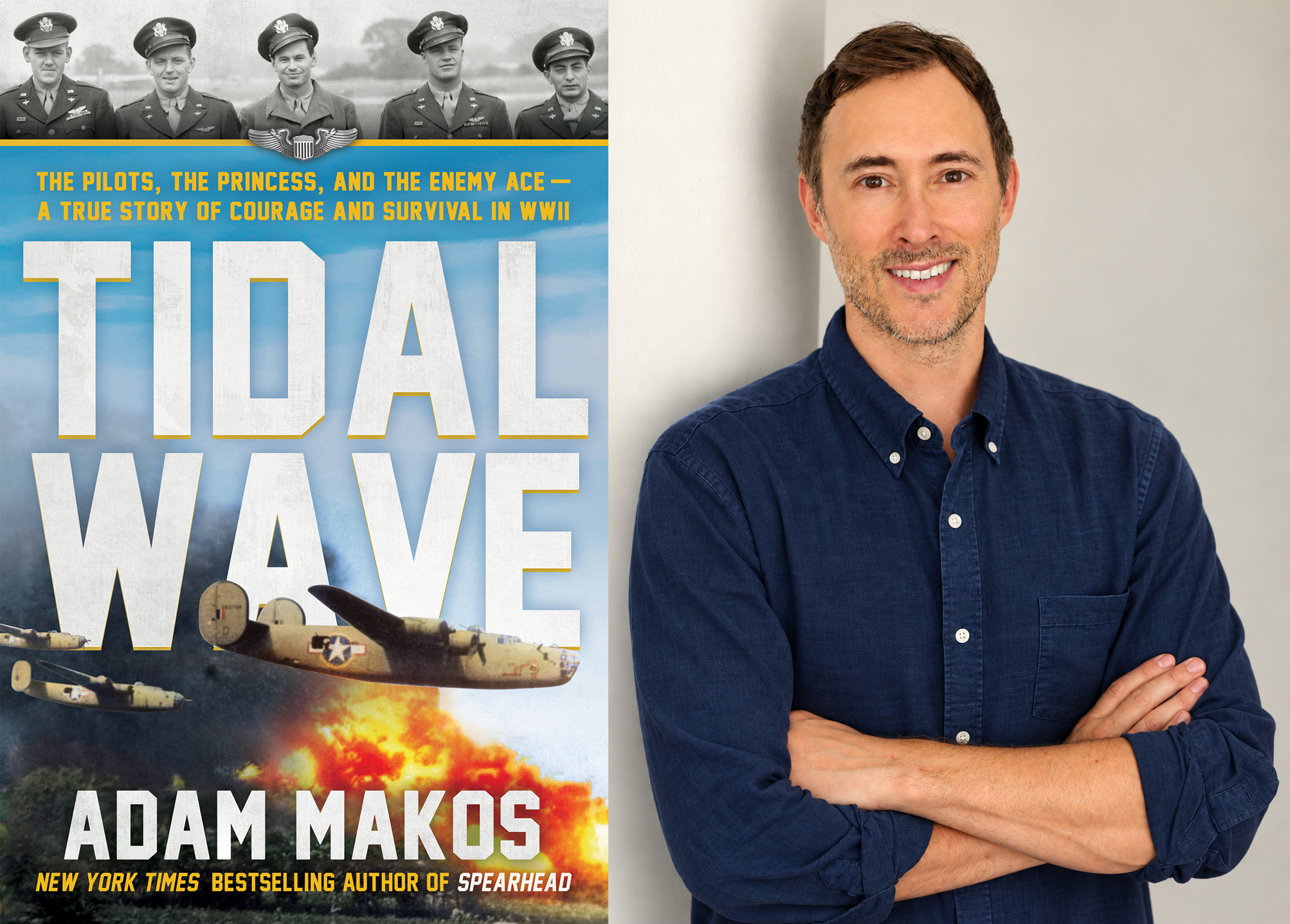
That scene is a pivotal moment in Adam Makos’ new book Tidal Wave: The Pilots, the Princess, and the Enemy Ace – A True Story of Courage and Survival in WWII. The bestselling author of World War II books A Higher Call and Spearhead details an amazing account of a little-known side story of the ill-fated mission to destroy “Hitler’s gas station.”
“That’s what the brass thought in 1943 when they sent those bombers into Romania at low level: wipe out Hitler’s refineries in one great raid,” Makos told Military Times.
“They said it would shorten the war by six months. The truth was, Operation Tidal Wave was the opening salvo in a campaign that took an entire year to knock Romania out of the war and deny Hitler its oil. It took more than 67 American missions — and 237 bombers lost — to batter Romania enough to cause regime change,” he added.
At the time, Romania was a reluctant ally of Germany. Ruled by a despotic fascist, the country had joined the Axis powers to fight its archnemesis, the Soviet Union. However, many in Romania were wary of the Nazis and favored the Allies.
One of those who believed the country was on the wrong side of the war was Princess Catherine. When the Chattanooga Choo Choo crashed on her estate, she took an active interest in the welfare of its crew, rescuing them from internment in a Luftwaffe POW camp.
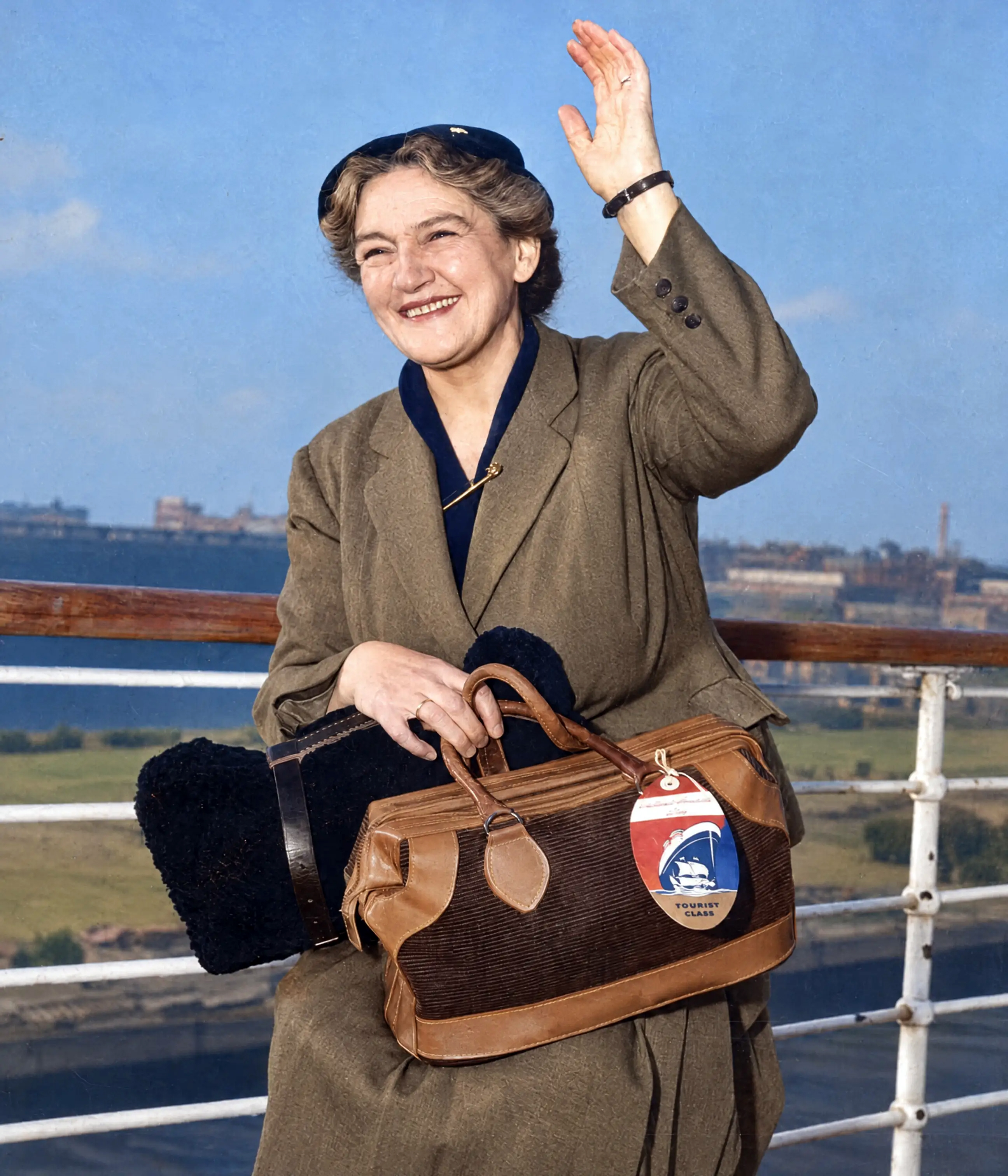
Instead, Poulson and his men went to a safer Romanian prison camp where Princess Catherine could protect them. She even managed to have the camp commander replaced when he became too severe in his handling of the Americans.
Makos was tipped off to the story by Frederick W. Smith, founder of FedEx, who died in 2025. Smith told the author about Poulson and how his crew was aided by the Romanian princess. As the author investigated, he learned the B-24 copilot was still alive
“We found one of the last survivors of the 1,700 men that flew that mission in 1943. I was overjoyed,” says Makos, adding, “Ernie had a sharp mind and was physically fit. At 97, as he was telling me this story, you could tell he was still a tough guy.”
As the war progressed, more and more Romanians were killed in the senseless slaughter of the Eastern Front in Russia. Support for the Nazis weakened and in 1944, the country’s monarch — Michael I, who was king in name only — led a coup against the country’s dictator and flipped sides to join the Allies.
This enabled Romania’s leading fighter ace — Prince Constantin “Buzz” Cantacuzino, who hated the Nazis — to assist Allied airmen held prisoner in his country, including Lt. Col. James Alexander Gunn, the highest-ranking U.S. officer shot down in the Ploesti Raid.
In a Messerschmitt Bf 109 painted with two large American flags on its sides, Cantacuzino flew Gunn to safety in Italy. From there, the colonel helped plan the Operation Reunion rescue of more than 1,000 captured Allied airmen, including Poulson and his crew, in Boeing B-17 bombers converted into troop transports.
Buzz flew escort for the Flying Fortresses in a North American P-51 Mustang.
Like most of Makos’ books, the narrative doesn’t end with the guns falling silent. The author writes about how Princess Catherine and Poulson meet again years later in Europe, where the American learned just how much was at stake for his benefactor if she had been caught.
After the Communists seized control in Romania, Catherine escaped to America, where she lived in Texas with one of the airmen on Poulson’s plane: Richard Britt. Following the Romanian Revolution in 1989, the princess returned to her homeland, where she died at 100 in 1993.
“This is such an amazing story,” Makos says. “We were so lucky that many of the people involved wrote memoirs, so we were able to piece it together and triangulate all the incredible events for accuracy. I interviewed Ernie Poulson in 2018 to get his side of it. He played such a movie-like role in this story.”
Poulson later headed the Atlas missile program for the U.S. Air Force, retiring as a colonel in 1961. He then became a professor of business at the University of Utah. He died in 2020.
Tapping into unreleased family archives, diaries, letters and firsthand accounts, Makos crafts a fast-paced, action-packed narrative that ties together many important individuals and historic events into a personal story about World War II. By presenting this aspect of the Ploesti Raid, he says he is focusing on the brave men who sacrificed so much to stop the Nazi war machine.
“Some 310 of them gave their lives, and they did help bring about an earlier end to the most terrible war in human history. Are we a country that remembers our heroes, those audacious young men who flew into the jaws of hell? Or will they be just a footnote in history?
“That’s why I wrote Tidal Wave: to make sure their names and their story are known.”