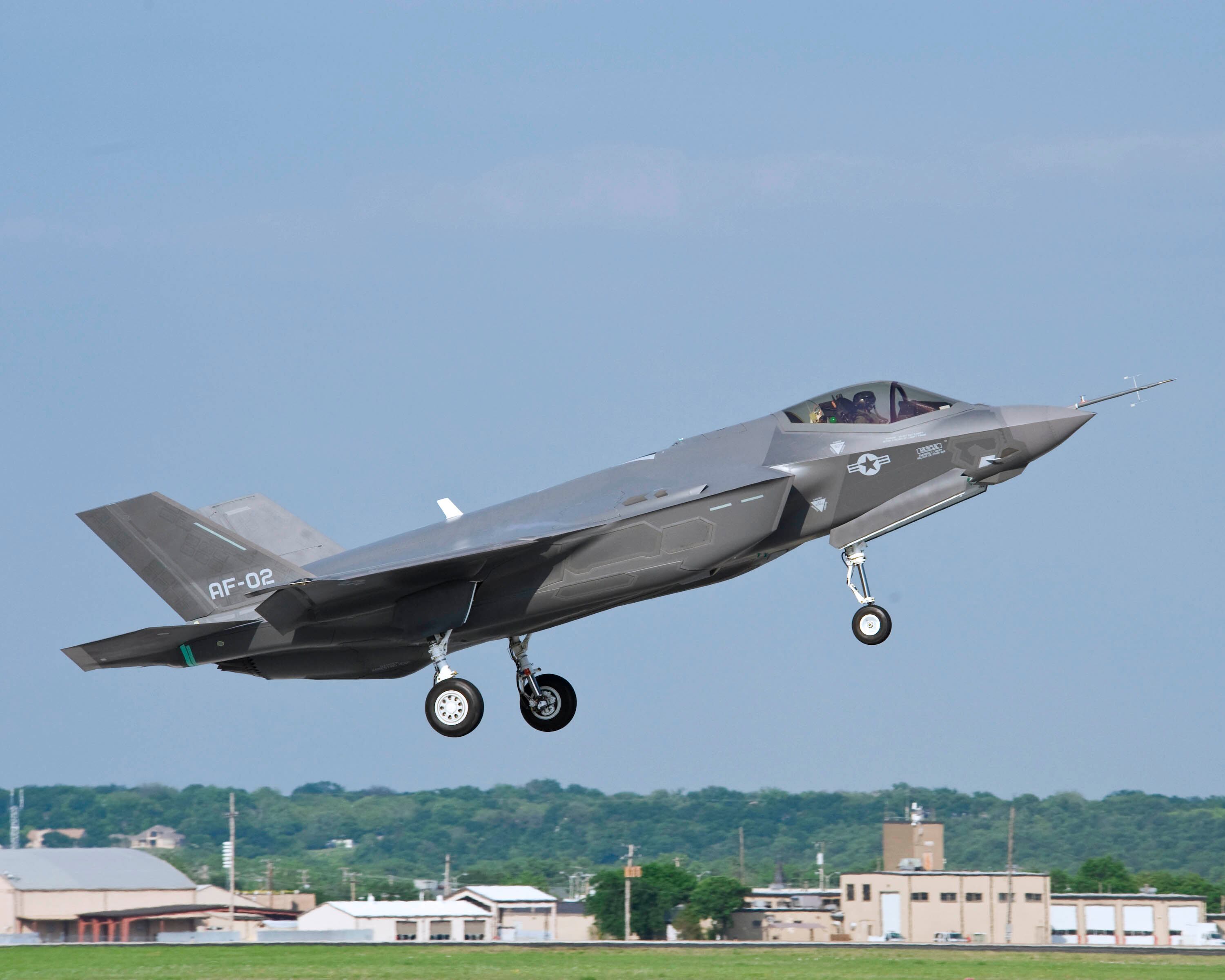
A Utah Senate committee on Friday endorsed expanding a military test site in the state to provide more space for the F-35 and other aircraft to train.
Utah's Senate Economic Development and Workforce Services Committee voted 4-0 to pass SCR 7, the Concurrent Resolution Regarding a Military Test Site in Western Utah. Three senators were absent from the committee vote.
The bill endorses a proposal to withdraw more than 625,643 acres of Bureau of Land Management land for Air Force use, to expand Hill Air Force Base's Utah Test and Training Range. Utah law requires its state legislature to endorse plans to sell or transfer more than 10,000 acres of School and Institutional Trust Lands, which would be part of this expansion.
The range, operated by the 388th Range Squadron, is located about 100 miles west of the base. The base says it has the largest block of overland contiguous special use airspace within the continental U.S. — measuring 207 by 122 nautical miles.
But for fifth-generation weapons systems such as the F-35 and F-22, that won't be enough, SRC 7 says. Those weapons require a larger weapons testing footprint than currently exists within the test range, says the bill, sponsored by Utah sState Sen. Curtis Bramble, R-Provo. There is also a risk of nearby development encroaching on the area, which could disrupt test and training activities, the bill says.
The bill says expanding the range is crucial because Hill's 388th Fighter Wing and the Air Force Reserve 419th Fighter Wing will become the F-35's first operational squadrons. Hill will be the biggest F-35 base in the world, supporting 72 of the jets.
But if the bill passes, Utah's legislature would only support the range's expansion as long as a resource management group is established to advise the Air Force on the public access to, use of, and management of the land; the public can continue to access and use the lands except during temporary closures by the Air Force, and grazing will continue.
The bill also requires that water rights in the area will not be changed, current restricted airspace will not be expanded or otherwise changed, the government will not designate any new federal wilderness areas or have a net gain in federal lands in Utah, limit or alter access to historic trails or other historic landmarks, close Interstate 80, or intentionally land or detonate any weapons in the newly-added areas.
Stephen Losey is the air warfare reporter for Defense News. He previously covered leadership and personnel issues at Air Force Times, and the Pentagon, special operations and air warfare at Military.com. He has traveled to the Middle East to cover U.S. Air Force operations.