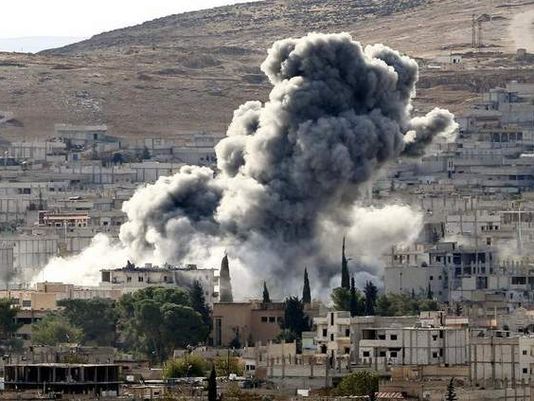
The fight against the Islamic State group is unlike any other air campaign in recent history, because the enemy is intermingled with innocent civilians in Iraq and Syria, creating a challenge for battle planners and pilots alike, the head of the Operation Inherent Resolve air campaign said Friday.
The complexity in targeting and the push to avoid collateral damage are two reasons many sorties do not include air strikes, a situation that has prompted several lawmakers to criticize the tight restrictions on when pilots are able to drop bombs.
“I am comfortable with the rules of engagement,” Lt. Gen. John Hesterman, commander of Air Forces Central Command, said. “Nothing stops us from self defense. If we see the enemy shooting at friendly forces or at us, we kill them right away.”
However, Islamic State fighters are no longer marching in large groups or forming easily identifiable targets, forcing pilots and other airstrike planners to “unwind” them from the populace and target them when collateral damage is minimized. This has led some pilots to express frustration at being unable to fire weapons at some targets while they wait for approval.
Sen. John McCain, R-Ariz., said recently that pilots are returning to base without firing a weapon about 75 percent of the time. McCain used this number to justify his call for joint terminal attack controllers to be on the ground with Iraqi forces to better identify targets. Currently, the U.S. and coalition “doesn’t have the right strategy” to win the fight, McCain said during an appearance on CBS’ “Face the Nation.”
Hesterman said JTACs “would be helpful,” but so far leadership has not determined it to be necessary. The airmen are in the combined air operations center providing input on every target, including a collateral damage assessment before the sortie is given approval. All airstrike targets are identified through intelligence, surveillance and reconnaissance flights and with input from Iraqi forces. While JTACs could be “value added,” planners mostly just need precision information and the boots on the ground are not necessary at this time, Hesterman said.
He added that the 75 percent figure is “probably accurate,” but also consistent with most air campaigns. Many sorties do not result in weapons releases because targeting changes or because the IS fighters in the crosshairs have moved to sensitive areas, such as near schools or mosques, Hesterman said.
“There’s never been a target that is easily available for a terrorist enemy that is wrapped around the population,” Hesterman said. “You have to unwind them from around a population and kill them where you can.”
Comparing airstrike numbers from Operation Inherent Resolve to other air campaigns, such as the early stages of Operation Iraqi Freedom in 2003, is not valid because then the enemy was a nation state with a fielded army. But Hesterman said the coalition is improving its ability to find fighters and targeting is a “growth industry.” Since the operation began in August, coalition airstrikes have killed more than 1,000 Islamic State fighters per month.
“If you are Da’esh leadership, you better be looking over your shoulder,” he said.
Hesterman’s comments come as Islamic State fighters have been able to gain ground and hold cities such as Ramadi in Iraq. He pushed back on the notion that these are “strategic victories,” instead saying they are tactical advancements that need to be countered by Iraqi forces on the ground.
“The only thing air power doesn’t do is take hold and govern a territory,” he said. “Iraqis are going to have to do that.”